Update, 26 August 2026: a large flood came down the Bhote Koshi river on 26 August and damaged the road and the settlements at Timure and Syabrubesi, which is where this trek begins. The good news is that the Langtang Khola, the river this trek actually follows, is a different drainage and was not hit, so the trail itself is very probably fine. What is genuinely in question is the road and the town, not the walking. I have set out what is known so far, and the three things that will decide October, here. Do not cancel anything yet. If you are holding a booking on this trek, message me and I will tell you what I actually know that day.
Trek Highlights
- 12-day private trek through the Langtang Valley crossing the Ganja La Pass (5,122m). The technical pass that connects Langtang to Helambu, with a glacier section near the top.
- The Langtang Valley up to Kyanjin Gompa is the same as the standard 8-day version, then the route turns south over the Ganja La instead of returning the same way.
- Ganja La is a serious pass with glacier walking and a steep south-side descent. Not for first-time altitude trekkers. We provide microspikes and trekking poles.
- Private guide and porter ratio that does not change based on group size. No shared-group surcharge gimmicks.
- 10% deposit to lock dates, balance paid in person in Kathmandu. No full prepayment required to a foreign trekker you have never met.
- Every booking helps fund our Nagarjun Learning Center work at Saldum, where 70 children are taught by one dedicated teacher.
Why I built this trek the way I did
I am Shreejan, the founder of The Everest Holiday. The Langtang Ganja La trek is the version of Langtang for experienced trekkers who want the high pass crossing experience without committing to the more remote Everest or Annapurna routes. The pass at 5,122m has a glacier section near the top and a steep, technical south-side descent. It is not a casual walk.
The first 6 days of the trek are the same as our standard 8-day Langtang Valley route: drive to Syabrubesi, walk up to Lama Hotel, Langtang Village, and Kyanjin Gompa. The acclimatisation day at Kyanjin (3,865m) is important because the Ganja La crossing 2 days later goes to 5,122m. The day-7 walk from Kyanjin to Ganja La Phedi base camp (4,400m) sleeps you higher for the pass push.
Ganja La day is the technical day of the trek. The ascent is steep scree and snow above 4,800m, then a glacier section near the top requiring microspikes. The descent on the Helambu side is the steepest part of the trek and the part where most twisted ankles happen. We provide trekking poles and we recommend you bring waterproof gloves and a buff for face protection in case the wind picks up.
We run this as a private trek by default, and we never add strangers to your booking. If you would rather have company on the trail, you can choose to join one of our fixed departures instead. Either way the price per person is the same. Your pace, your rest days, your conversations at dinner. We do not change the guide-to-porter ratio when the group is smaller. Your guide and porter are with you whether you are two people or six.
Every booking on this trip helps us pay the teacher’s salary at our Nagarjun Learning Center in Saldum, where 70 children get free education. The salary is currently funded out of my own pocket. Your trek is what makes that sustainable.
“This is a serious trekking route and our guide made sure we were ready for it. The pass at 5100 metres was physically demanding but the sense of achievement at the top was incredible. The views of the Langtang range from the pass are unforgettable. Not for beginners but experienced trekkers will love it.”
— Felix Weber · Verified TripAdvisor Review, October 2025 · ★★★★★
The rope goes taut. Your crampons bite into hard-packed snow at 5,130 metres, and the wind is so strong it pushes your breath sideways. Below you, the Langtang Valley drops away into a dark green carpet of forest. Ahead, the Helambu hills roll south toward Kathmandu in layer after hazy layer. This is the Ganja La Pass, one of Nepal's most demanding non-climbing crossings, and the view from the top is earned in every sense of the word.
The Langtang Ganja La Pass Trek starts in Syabrubesi (1,460m), goes along the well-known Langtang Valley route through bamboo forests and Tamang villages to Kyanjin Gompa (3,870m), then heads south into wild, untrailed terrain to cross the Ganja La at 5,130m before going down through the Hyolmo settlements of Helambu and returning to Kathmandu by road.
What Makes This Trek Special
This trek is for people who have done the popular trails and want something wilder.
The Langtang Valley portion gives you everything the standard trek offers: red panda habitat, the rebuilt village memorial, yak cheese at Kyanjin Gompa, and the quiet intimacy of a trail with a fraction of Everest's crowds. But then the path turns south, the teahouses end, and you enter a different world. The approach to Ganja La is raw mountain terrain: moraine fields, glacial streams, and a high camp where the only sounds are wind and the distant crack of ice calving from the ridgeline above. The pass crossing itself is the physical and emotional peak of the trek. You climb steeply on snow, reach the cairn-marked summit, and look out across two entirely different landscapes: the white granite and ice of Langtang behind you and the green forested hills of Helambu ahead.
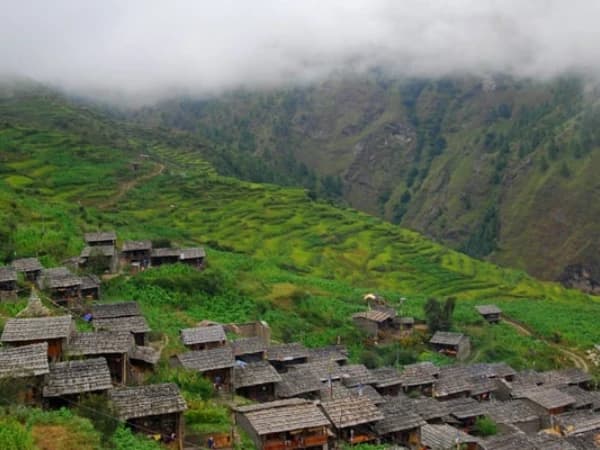
The descent into Helambu feels like entering another country. The air warms. The vegetation thickens. The architecture shifts from Tamang stone houses to Hyolmo wooden lodges decorated with detailed carvings. The Hyolmo people practice a form of Tibetan Buddhism distinct from their Tamang neighbours, with their own festivals, their own monastery traditions, and their own cuisine. You finish the trek in a landscape of terraced farmland and rhododendron forest, worlds away from the glacial valley where you started.
This is not a trek for everyone. It requires solid fitness, prior trekking experience above 4,000m, and the mental readiness to spend a day in genuinely demanding conditions. But for those who are ready, the Ganja La Pass crossing delivers one of the most rewarding and least-traveled experiences in the Nepali Himalaya.
Arrive by 4:00 PM on Day One
Please arrive in Kathmandu by 4:00 PM on Day 1 so our team can complete the welcome briefing, confirm your gear, and ensure a smooth early-morning departure for Syabrubesi the next day. If your flight lands later, please let us know in advance, and we will adjust accordingly.
Online Trip Briefing
Before your trek, we arrange a video call to walk through the full itinerary, answer your questions about gear, fitness, and weather, and confirm all logistics. This service is included at no extra charge for all tiers. For this trek, the briefing will cover pass-crossing preparation, crampon use, and weather contingency plans in detail.
Note to Hikers
Every trek with The Everest Holiday is a personal trek arranged for your group, whether that is one person or twenty. We never add strangers to your group. Your guide, your pace, your experience.
Kathmandu Accommodation
Accommodation in Kathmandu is not included in the trek package but can be arranged on request. We recommend hotels in Thamel for convenient access to restaurants, gear shops, and our office.
12-Day Langtang Ganja La Pass Trek Overview
The Ganja La Pass (5,130m) is a high, glaciated saddle connecting the Langtang Valley in the north to the Helambu region in the south. It is classified as a trekking pass, not a climbing route, but it sits at the extreme end of what non-technical trekking demands. Snow and ice are present on the north face year-round, and the approach involves steep moraine, loose scree, and exposure to weather that can change within minutes. Crampons and an ice axe may be required depending on conditions, and an experienced guide is not optional — it is essential.
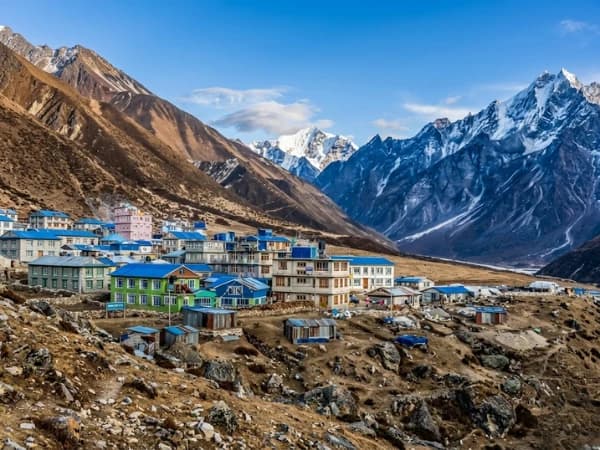
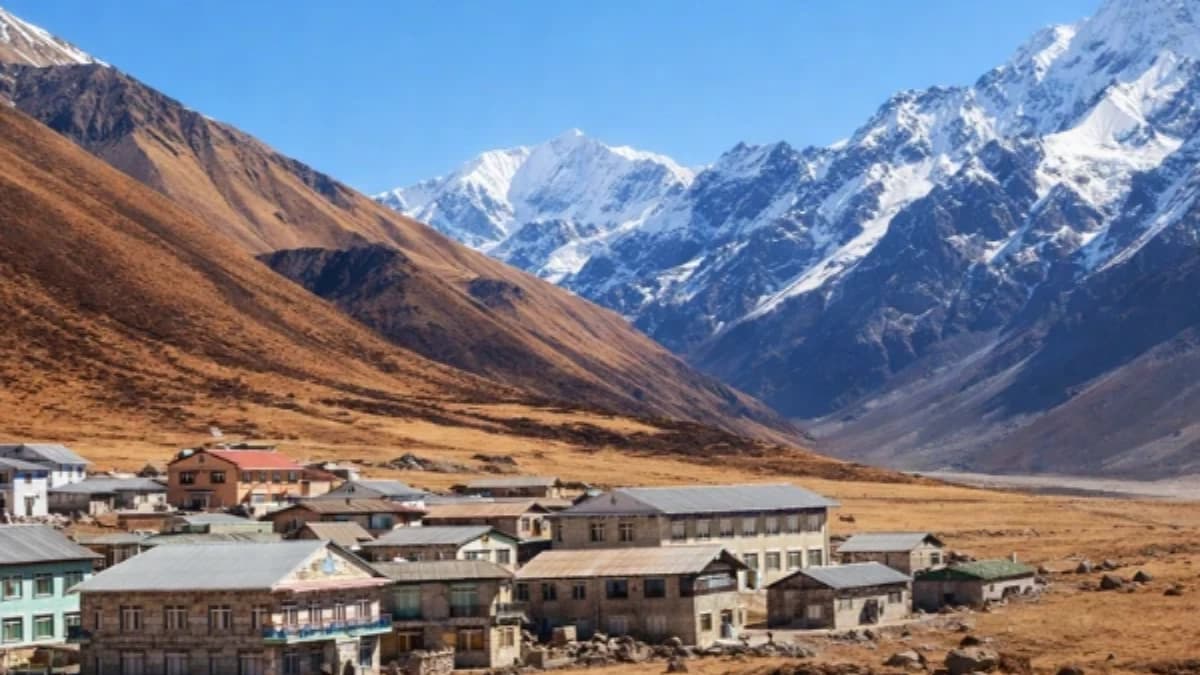
The first half of this trek follows the well-established Langtang Valley trail: Syabrubesi to Lama Hotel through bamboo and red panda habitat, onward through the rebuilt Langtang Village to Kyanjin Gompa beneath the ice walls of Langtang Lirung (7,227m). From Kyanjin Gompa, the route diverges from the standard valley trek and heads south into a high camp near the base of the pass. The crossing day is long, steep, and exposed. Once over the top, you descend rapidly into the warmer, greener Helambu region, passing through Hyolmo villages with their distinctive Tibetan-influenced architecture and carved wooden monasteries.
What makes this trek different is the contrast. In 12 days, you move from subtropical forest to glacial ice to pastoral hill country. You sleep in Tamang teahouses, camp near a 5,000-meter pass, and finish in Hyolmo lodges where the food shifts from dal bhat to potato pancakes and butter tea. No other trek in the Langtang region packs this much geographic and cultural range into less than two weeks.
No flights are required. You drive from Kathmandu to Syabrubesi (7-8 hours) and return from Helambu by road. The one-way traverse means you never retrace your steps, and every day brings new terrain.
Highlights
- Cross the Ganja La Pass (5,130m), one of Nepal's most challenging non-climbing trekking passes, connecting two distinct mountain regions
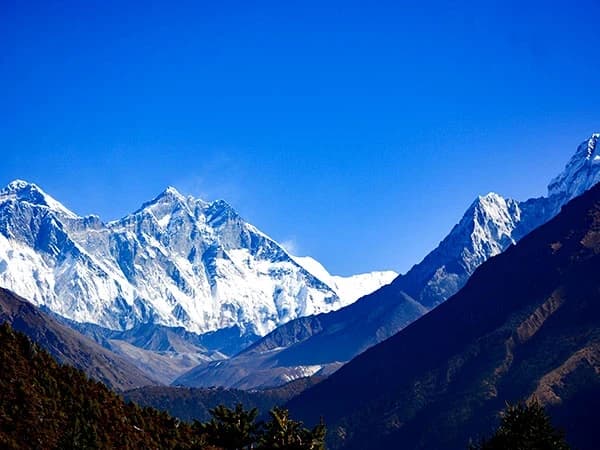
- Trek through the Langtang Valley with views of Langtang Lirung (7,227m), Langtang Ri (7,205m), and Dorje Lakpa (6,966m)
- Visit Kyanjin Gompa and its centuries-old monastery, with optional day hike to Tserko Ri (5,033m) for views into Tibet
- Descend into the Helambu region, home to the Hyolmo people, one of Nepal's most culturally distinct and least-visited communities
- Experience two entirely different cultures in one trek: Tamang Buddhist villages in Langtang and Hyolmo settlements in Helambu
- Walk through four climate zones from subtropical bamboo forest to glacial terrain to temperate hill country
- One-way traverse: no backtracking, new scenery every day from Syabrubesi to Helambu
Langtang Ganja La Pass at a glance
| Duration | 12 days, Kathmandu to Kathmandu |
|---|---|
| Highest point | Ganja La pass, 5,122 m |
| Region | Langtang National Park into Helambu |
| Difficulty | Challenging, 4 out of 5; a technical pass with glacier walking |
| Permits | Langtang National Park and TIMS card |
| Best months | Late September to November and April to May |
Best time to trek Langtang Ganja La Pass
| Season | Months | What it is like | Verdict |
|---|---|---|---|
| Autumn | October to November | Clearest and most reliable; the main season | Best overall |
| Spring | March to April | Warm, rhododendron in the forest; the pass is more reliable later in spring | Great, second season |
| Winter | December to February | Snow and ice make the Ganja La dangerous, so we do not cross it in deep winter | Pass usually closed |
| Monsoon | June to mid-September | Rain, leeches and cloud on the view | Avoid |
Permits
Langtang is not a restricted area, so there is no special permit. You need the two below, and we arrange both and include them in your trek price.
| Permit | Foreigner | SAARC |
|---|---|---|
| Langtang National Park entry | NPR 3,000 | NPR 1,500 |
| TIMS card | NPR 2,000 | NPR 1,000 |
Trekking as a group?
Bring your own group — friends, family, a club, a university society, your workplace, or a cause you are raising money for — and any of the three comfort levels can run as a private group on your own dates. Private or group, the price per person is the same; we never put strangers in your group. The more of you there are, the less each person pays:
| Group size | Budget (per person) | Standard (per person) | Luxury (per person) |
|---|---|---|---|
| 1-4 people | US$725 | US$999 | US$1,999 |
| 5-8 people | US$675 | US$949 | US$1,949 |
| 9-12 people | US$625 | US$899 | US$1,899 |
| 13-20 people | US$575 | US$849 | US$1,849 |
The organiser travels free. Get fourteen or more paying people together and whoever organised the group joins the trip free. The one thing the organiser still pays is their own flights and permits, since those are fixed costs we pay out for every person and cannot absorb, and we cover the rest. Your departure is guaranteed on your own dates — from a solo traveller up to a group of twenty, and we never merge you into another trip.
Planning a group? Message me on WhatsApp with the trip, roughly when, and how many of you, and I will send you a price and a plan.
Compare Our Three Packages
| Feature | Budget | Standard | Luxury |
|---|---|---|---|
| Price from | USD 725 | USD 999 | USD 1,999 |
| Transport (KTM-Syabrubesi, Helambu-KTM) | Local vehicle / shared jeep | Shared tourist vehicle | Luxury private vehicle |
| Trek Meals | Not included (buy at teahouses) | 3 meals daily with fruits | 3 meals daily with fruits, dry fruits, nuts, and all drinks except alcohol |
| Accommodation | Shared teahouse rooms (camping near pass) | Private twin rooms were available (camping near the pass) | Best available rooms with a bed heater, hot showers where available, camping near the pass with quality gear |
| Porter | Not included | 1 porter per 2 trekkers (10 kg each) | 1 porter per trekker (carry nothing yourself) |
| Guide | 1 Nepal government well-trained guide, assistant at 8+ trekkers | 1 senior guide per 6; assistant at 7+ | 1 senior guide per 2 trekkers, plus an assistant guide for every 2 more |
| SIM Card | SIM card (no data) | SIM with limited data | SIM with unlimited data |
| Sleeping Bag & Jacket | Loan included (safety requirement) | Loan included + duffel bag | Loan included + duffel bag |
| Water | Not included | 2L hot water daily + tea/coffee at meals | All drinks anytime (except alcohol) |
| Crampons & Ice Axe | Available for hire (not included) | Provided if conditions require | Provided, plus trekking poles |
| Farewell Dinner | Included | Included | Included |
Difficulty: Challenging (4 out of 5)
The Langtang Ganja La Pass Trek reaches a maximum altitude of 5,130m at the Ganja La. The pass crossing involves a steep ascent on snow and scree, potential use of crampons and ice axe, and full exposure to high-altitude weather. You walk 5-8 hours per day, with the past day requiring up to 10 hours of sustained effort. Prior trekking experience above 4,000m is strongly recommended. This is not a beginner trek. You should be comfortable with long uphill days, cold camping conditions, and the physical demands of crossing a high pass in variable weather. We recommend 8-10 weeks of dedicated preparation: hill walking, stair climbing, and cardiovascular fitness. Our guides carry a pulse oximeter and monitor conditions daily. If conditions on the pass are unsafe, we have contingency plans to reroute or delay. Learn more about altitude sickness prevention.
Crossing the Ganja La, funding a classroom
The Ganja La pass at 5,130 metres is the most demanding crossing in the Langtang region. The pricing reflects that, and the contribution to the Nagarjun Learning Center reflects the pricing. The center is the village school in Saldum that my mother helps run. Around seventy children study there for free and eat two meals each school day. We have operated it as a registered Nepalese charity since 2019, and it is listed on the UN Partner Portal.