Chitwan Photography Tour - 6 Days Itinerary and Cost

2 reviews
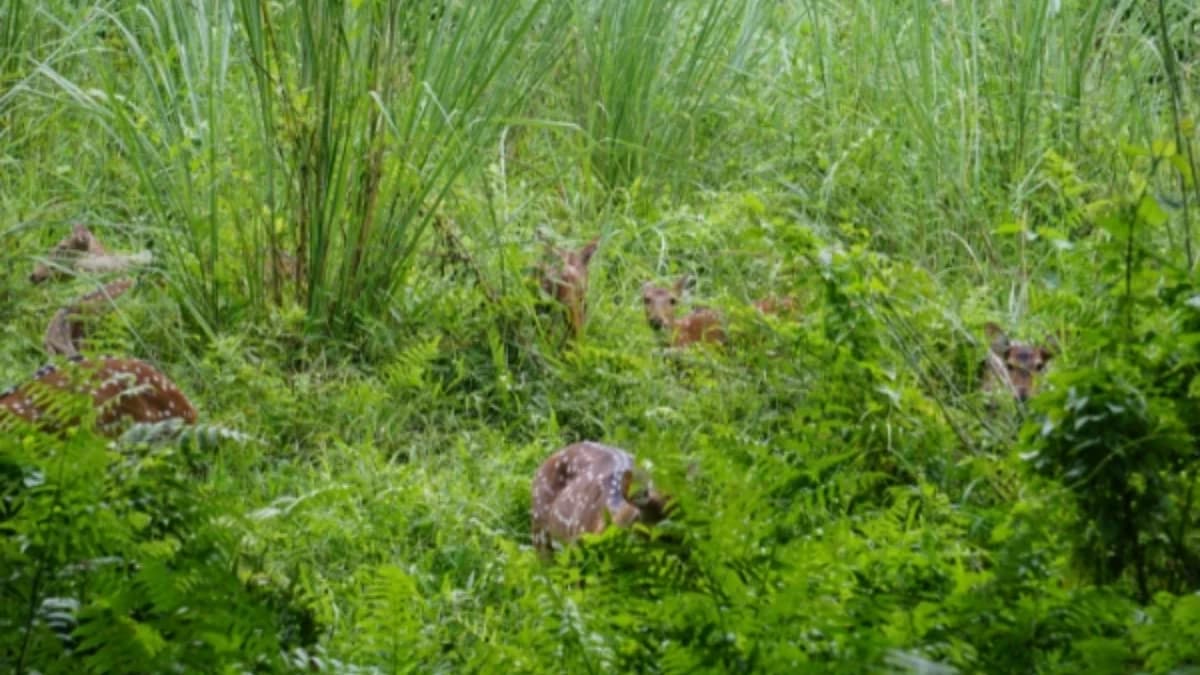
Deer in grassland at Chitwan National Park, Nepal.
Quick Overview
Duration6 Days
Trip GradeEasy
CountryNepal
Maximum Altitude1,400 m / 4,593 ft
Group Size1 - 15
StartsKathmandu
EndsKathmandu
ActivitiesWildlife Photography
Best TimeMarch to May / October to November

The canoe drifts around a bend in the Rapti River and there it is — a greater one-horned rhinoceros standing chest-deep in the shallows, water streaming off its armoured hide, the morning mist still clinging to the riverbank behind it. You've got a 200mm lens trained on its eye and the light is perfect: soft, golden, angled low from the east. Your guide holds the canoe steady with the paddle. For thirty seconds, the only sounds are the shutter and the river. Then the rhino snorts, turns, and crashes through the reeds into the sal forest. Six hundred frames on your card and you haven't even had breakfast yet. That's a morning in Chitwan National Park, and you've got six days of this ahead.

This tour was built for photographers who want more than a safari snapshot. Every activity, from the 4-5 hour private jeep safaris through the core zone to the canoe rides at dawn and the guided jungle walks through sal forest, has been timed around optimal light and animal behaviour. You'll photograph the park's 57 mammal species, 47 reptile species, and over 545 bird species in habitats that range from dense subtropical forest to open grasslands and river systems. And because all the logistics — transfers, permits, jungle lodge, meals — are sorted before you arrive, the only thing you need to think about is your next shot. This is wildlife photography the way it should be done.

What Makes This Tour Unforgettable

  • A 4-5 hour exclusive jeep safari through Chitwan's core zone with a trained wildlife tracker, covering the best grasslands and forest edges where Bengal tigers, rhinos, and sloth bears are most active.
  • Dawn canoe ride on the Rapti River for water-level shots of gharial crocodiles, mugger crocodiles, and waterbirds in the soft early light — one of Nepal's most iconic photography experiences.
  • Visit an ethical elephant sanctuary and crocodile conservation centre, where you'll photograph these animals up close while learning about Nepal's hands-on conservation efforts.
  • Golden-hour sunrise and sunset shooting sessions on the Rapti River banks, where the light paints the water and the distant treeline in colours that change by the minute.
  • Guided jungle walk through the sal forest with a professional naturalist, giving you ground-level angles and macro opportunities that a vehicle simply can't provide.
  • Cultural photography in Tharu villages, including the distinctive Tharu stick dance — a tradition that exists nowhere else in the world and makes for striking documentary images.
  • Over 545 bird species recorded in Chitwan, from tiny sunbirds to massive hornbills, making this one of Asia's premier birding destinations.
  • All park permits, private safari vehicles, naturalist guides, and comfortable jungle lodge accommodation handled for you — arrive with your camera and nothing else to worry about.

6-Day Chitwan Photography Tour Overview

The tour begins with a scenic drive from Kathmandu through the Terai lowlands to your jungle lodge on the edge of Chitwan National Park. From here, each day is structured around the rhythms of the wildlife: early mornings when the animals are active and the light is golden, midday rest when the jungle goes quiet, and late-afternoon sessions when the forest comes alive again before dusk.

The core of the experience is the private jeep safari through Chitwan's core zone, where your tracker will read the grasslands for signs of tiger movement, rhino trails, and bird activity. A canoe trip down the Rapti River gives you an entirely different perspective — water-level shots of crocodiles sunning themselves on the banks and herons fishing in the shallows. Guided jungle walks take you into the sal forest on foot, where the sounds, smells, and close-up encounters feel completely different from the vehicle.

Between the wildlife, you'll photograph the Tharu people and their traditions — a cultural dimension that adds depth and variety to any portfolio. The tour ends with a comfortable drive back to Kathmandu, your memory cards heavy with images that most visitors to Nepal never get the chance to capture.

Before You Arrive

We recommend arriving in Kathmandu by 4:00 pm the day before departure. This gives you time for a final gear check, a trip briefing with your naturalist guide, and a chance to discuss lens choices and camera settings for jungle conditions.

Your Online Briefing

After you book, we'll send you an email with available times for a video call. This is your chance to discuss your photography goals — whether you're focused on tigers, birds, landscapes, or cultural subjects. We'll go through the daily schedule, advise on what focal lengths work best in each habitat, and answer every question you have.

Your Tour, Your Way

This is a private tour. Your group travels with your own naturalist guide, at your own pace. We'll never add strangers to your group. Want to skip the cultural visit and spend the entire afternoon at a waterhole? Prefer to focus on birds rather than mammals? We adjust everything. Your Kathmandu hotel is not included in the package price, giving you the freedom to choose accommodation that suits your budget.

Compare Our Packages

  Standard Luxury
Price from USD 999 USD 1,999
Meals All meals included (B/L/D) All meals + all drinks (except alcohol)
Lodge Comfortable jungle lodge, private rooms Premium jungle lodge / resort
Safari vehicle Private tourist vehicle Luxury private vehicle
Guide Professional naturalist guide Senior naturalist guide
Extras Tea, coffee, soft drinks included Seasonal fruits, dry fruits, and all non-alcoholic drinks
Best for Comfortable wildlife photography Premium Chitwan experience

Looking for a budget option? We can build a custom itinerary to match your budget — contact us for a tailored quote.

Same expert naturalist guides, same national park, same incredible wildlife — choose the comfort level that fits you.

Your Tour, Our Family

When Hari Lal Simkhada helped international travellers experience the Himalayas in the 1960s, he could not have imagined his grandson would be designing wildlife photography tours across the Terai six decades later. His son, Ganesh Prasad Simkhada, went on to hold senior positions in Nepal's tourism and mountaineering institutions. Today, Shreejan Simkhada carries that legacy forward as CEO of The Everest Holiday, personally designing every itinerary and hand-picking the naturalist guide for your group.

For this Chitwan photography tour, your guide will be one of our experienced naturalists who knows the park's trails, animal patterns, and best photographic positions. Shreejan briefs every guide personally before your tour begins.

Need anything? WhatsApp Shreejan directly: +977 9810351300.

Why Photographers Trust Us

Chitwan specialists. We know which river bend the rhinos visit at dawn, which grassland the elephants cross at dusk, and which Tharu village welcomes cameras with the widest smiles. Six days is enough to fill a portfolio if you're in the right place at the right time — and we make sure you are.

Small groups for quiet shooting. Wildlife doesn't pose for crowds. Our small group sizes mean less noise, better positioning, and more keeper shots.

Trusted by 320+ guests. TripAdvisor Travellers' Choice 2024. Three generations of local knowledge.

Solo Travellers Welcome

Most wildlife photographers travel solo, and this tour is designed with that in mind. You can book it as a private experience for yourself, or let us know and we'll list your date as a fixed departure so other solo photographers can join you. Group size ranges from 1 to 20, and the quiet, patient nature of wildlife photography means smaller groups often produce the best results.

Many of our solo travellers tell us the shared hours in the hide, waiting for the light and the animals, create friendships that last well beyond the trip. By the third morning safari, you'll have shooting partners for life.

Difficulty: Easy (1 out of 5)

This is a vehicle-based photography tour with no strenuous hiking or altitude concerns. Maximum altitude is 1,400 m (4,593 ft) at the Kathmandu departure point; the park itself sits at around 150-300 m in the Terai lowlands. Days involve jeep safaris, canoe rides, and short guided walks on flat jungle trails. No particular fitness level is required — the physical demand comes from early mornings and long hours of patient observation, not from walking. The Terai climate is warm and humid, particularly from March to May, so bring light, breathable clothing, neutral-toned layers for the jungle, and a strong insect repellent.

Trek With a Purpose — Changing Lives, One Frame at a Time

In 2019, Shreejan Simkhada and Shamjhana Basukala founded the Nagarjun Learning Center to give back to the communities that shaped their family. Today, 70 children receive free education and hot meals daily at the flagship centre in Saldum Village, Dhading District. The centre has expanded to 7 locations across Nepal, provided free medical care to over 600 people, and brought internet access to 65 children for the first time in their village's history.

A portion of every booking with The Everest Holiday supports the Nagarjun Learning Center, which is verified and listed on the UN Partner Portal. When you photograph Chitwan's wildlife, every frame helps change a life.

Short Itinerary
Day 01: Arrive in Kathmandu, where you'll have a welcome and a short tour of Nepal.
Day 02: Drive starts with 183 km from Kathmandu (1,400 m / 4,593 ft) to Chitwan (415 m / 1,362 ft), usually around 5 to 6 hours, with a total elevation change of 985 m / 3,231 ft.
Max Altitude: 415m / 1,362ft
Day 03: Full Day of Bird, Crocodile, and Wildlife Photography on an Immersive River Safari and Jungle Hike
Max Altitude: 415m / 1,362ft
Day 04: Visit to the Ethical Elephant Sanctuary and a long Jeep safari in the jungle. This is the best way to take pictures of wildlife in Chitwan.
Max Altitude: 415m / 1,362ft
Day 05: Drive starts with 183 km from Chitwan (415 m / 1,362 ft) to Kathmandu (1,400 m / 4,593 ft), usually around 6 hours, with a total elevation change of 985 m / 3,231 ft
Max Altitude: 1,400 m / 4,593 ft
Day 06: Last Day—Transfer to the Airport and End of the Tour
Expand
Detailed Itinerary
Day 01:

Your wildlife photography adventure starts at Tribhuvan International Airport, where our representative is waiting with a silk khada and a warm welcome. The drive to your Kathmandu hotel takes around 25 minutes. Check in, freshen up, and take a breath. Tomorrow is an early departure for Chitwan.

In the afternoon, your photography guide meets you at the hotel for a pre-expedition briefing. This is where you plan your shots. You will go through the six-day route together: the drive to Chitwan, morning jeep safaris through the sal forest, dawn canoe rides along the Rapti River, walking safaris for close-up birdlife, and the cultural photography opportunities in Tharu villages.

Your guide discusses light conditions at different times of day, the best spots for rhino sightings, where tigers have been tracked recently, and which river banks attract the most birdlife. If you have particular species on your wish list, tell your guide now so they can plan the safari routes around your priorities.

The evening is free to explore Kathmandu. Thamel's narrow streets are full of life, colour, and unexpected photo opportunities even before the tour officially begins. Street vendors, temple courtyards, and rooftop views of the city at dusk are all worth capturing. Your guide can recommend a good restaurant for your first Nepali meal.

Day 02:

The five-to-six-hour drive from Kathmandu to Chitwan is a photography journey in itself. The road descends from the Kathmandu Valley through the Mahabharat foothills, the scenery shifting dramatically as terraced farmland gives way to subtropical forest, and the cool mountain air thickens into the warm humidity of the Terai plains. Through the vehicle window, you capture meandering rivers, roadside temples draped in marigolds, and the faces of villagers who pause their work to watch you pass. Each stop for tea or fuel reveals a new vignette of the lowlands. Nepal: a woman spreading rice to dry on a woven mat, a water buffalo standing knee-deep in a flooded paddy, a child balancing on a bamboo fence.

Arriving at your riverside jungle lodge in Chitwan by mid-afternoon, you settle in and head out for your first cultural immersion—a guided walk through a traditional Tharu village. The Tharu people have lived alongside Chitwan's wildlife for centuries, and their mud-and-straw houses, geometric wall paintings, and communal cooking fires offer deeply compelling subjects for documentary photography. Portraits here are powerful—weathered hands kneading rice flour, children's eyes reflecting firelight, elders in traditional dress posed against ochre walls. As the golden hour arrives, you walk to the banks of the Rapti River, where the sunset transforms the water into liquid bronze and the silhouette of the jungle treeline provides a dramatic foreground. The evening ends with a Tharu cultural dance performance under the stars, rhythmic, firelit, and utterly photogenic. Your Chitwan story has already begun.

Max Altitude: 415m / 1,362ftMeals: Breakfast / Lunch / DinnerAccommodation: HotelDuration: 5 - 6 hoursDistance: 183 km / 114 milesElevation: 985m / 3,231ft
Day 03:

Dawn breaks at five-thirty, and the Rapti River is shrouded in mist so thick it muffles sound and turns the far bank into a watercolor wash. You step into a traditional dugout canoe and glide silently downstream, your telephoto lens resting on the gunwale, your finger on the shutter release. The first subjects appear within minutes: a pied kingfisher hovering above the water, wings blurred to a disc; a great egret standing motionless in ankle-deep water, its reflection a perfect white double in the still surface; and a grey heron lunging at a fish with explosive speed. The river is alive with photographic possibility, and the canoe's silence means you're not scaring your subjects—you're drifting into their world.

The crocodiles come next. Gharials—critically endangered, with long, narrow snouts evolved for catching fish—bask on sandy banks in groups of three or four, utterly still, their armored bodies catching the low morning light. Marsh muggers, stockier and broader-jawed, share the same stretches, and the contrast between the two species makes for compelling paired compositions. After the canoe ride, the morning shifts to a guided jungle walking safari with your naturalist and an armed park ranger. On foot, everything intensifies: the damp smell of the forest floor, the crunch of dried leaves underfoot, the sudden alarm call of a spotted deer that sends your pulse racing. Your macro lens finds subjects everywhere: dew-beaded spider webs, the vivid orange of a forest mushroom, the textured bark of a centuries-old sal tree. If patience and luck align, you may photograph spotted deer, wild boar, or langur monkeys framed by the cathedral columns of the sal forest. The day closes at the Rapti River for the elephant bathing ceremony, mahouts guiding their gentle charges into the water for an evening wash, the late-afternoon light creating silhouettes and splashes that fill frame after frame.

Max Altitude: 415m / 1,362ftMeals: Breakfast / Lunch / DinnerAccommodation: Hotel
Day 04:

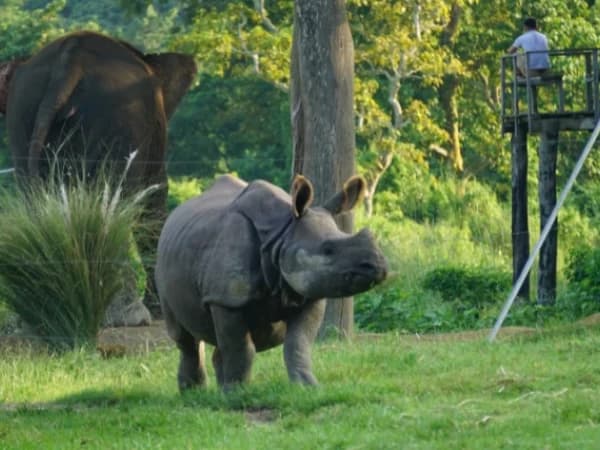
The morning begins with a visit to Chitwan's ethical elephant sanctuary and rehabilitation center, where rescued elephants live in a forested enclosure that allows natural behavior: foraging, bathing, and socializing without chains or restraint. This isn't a riding camp — it's a conservation facility, and the photographic approach reflects that. You observe from a respectful distance as elephants strip bark from trees with their trunks, toss dust over their backs, and wade into shallow pools. The images you capture here tell a story of recovery and dignity, and your guide shares the individual rescue histories that give depth and meaning to each portrait.

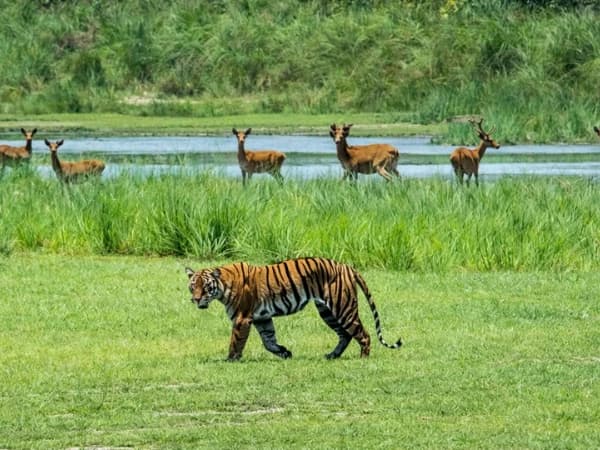
After this powerful session, the day escalates with a private full-day 4x4 jeep safari deep into Chitwan's core zones. Your open-top vehicle is positioned for professional wildlife photography: low sides for unobstructed angles, a beanbag rest for the telephoto, and a driver who knows exactly when to cut the engine and coast. The route covers every habitat type: vast phanta grasslands where rhinos graze like grey boulders come to life; dense sal forests where tiger pugmarks press fresh into the trail; and oxbow lakes where painted storks and cormorants roost in skeletal trees. Your naturalist tracker reads alarm calls, dung piles, and scratch marks with the fluency of a linguist reading text. The highlight—if fortune favors—is a Royal Bengal Tiger sighting: the striped coat appearing from behind a curtain of tall grass, the amber eyes locked on something distant, and the camera clicking in a burst of controlled urgency. The day ends at the Gharial and Mugger Crocodile Breeding Center, where you photograph these reptiles at every stage of life, from thumbnail-sized hatchlings to four-meter adults, with the controlled lighting and proximity that fieldwork rarely offers. Six days in one park means you can return to your favorite spots. That's the specialist's advantage.

Max Altitude: 415m / 1,362ftMeals: Breakfast / Lunch / DinnerAccommodation: Hotel
Day 05:

After a final breakfast accompanied by the jungle's dawn chorus—spotted owlets calling from the lodge rooftop and a peacock's distant scream from across the river—your private vehicle begins the return journey to Kathmandu. The five-to-six-hour drive climbs from the humid Terai back through the Mahabharat foothills, and the changing landscape offers last chances for roadside photography: terraced hillsides glowing green in the midday sun; suspension bridges spanning gorges of turquoise water; and the rhythms of highway life, tea stalls, temples, and hand-painted lorries with "Horn Please" on their tailgates.

Arriving in Kathmandu by late afternoon, you check back into your Thamel hotel, and the rest of the evening is yours. This is the time to begin the post-expedition ritual that every photographer knows: backing up memory cards, reviewing the day's selects, and starting to organize the collection that spans four days of intensive fieldwork. Perhaps a farewell dinner at a traditional Nepali restaurant, where the group gathers to share favorite moments: the gharial that held perfectly still for ten seconds, the golden-hour rhino shot, and the Tharu elder whose portrait stopped everyone mid-scroll. The images are safe, the stories are shared, and the satisfaction of a focused, specialist expedition settles in.

Max Altitude: 1,400 m / 4,593 ftMeals: Breakfast / Lunch / DinnerAccommodation: HotelDuration: 5 - 6 hoursDistance: 183 km / 114 milesElevation: 985m / 3,231ft
Day 06:

Your final morning in Nepal. After breakfast, our team transfers you to Tribhuvan International Airport for your departure flight. The drive from your hotel takes around 25 minutes through Kathmandu's morning streets, giving you one last glimpse of temple spires, prayer flags, and the organised chaos that makes this city unforgettable.

Six days, two ecosystems, and a memory card full of wildlife moments that most visitors to Nepal never see. Safe travels home, and we look forward to welcoming you back.

Accommodation: N/A (departure day)
Meals: Breakfast

Meals: Breakfast
Couldn't find what you're after?Reach out to our travel experts.
Customise Trip
Availability
Book your own private small group trip

Discounts are determined exclusively by the size of your group. We do not add additional members to your group.

hbl logo
Secure Payment by Himalayan Bank.

Equipment Lists

Packing Essentials for Photographers:

  • Camera Equipment: For taking pictures, you'll need a DSLR or compact camera with a long zoom lens (like a 100–400mm or 150–600mm lens), a wide-angle lens for landscapes and scenes, extra batteries, memory cards, a lens cleaning kit, and a weather cover.

  • Clothes: Long sleeves and slacks that are light and breathable (in neutral colours), a sun hat, solid walking shoes, and a waterproof jacket.

  • General: a power bank, binoculars, a universal adaptor, and a personal first-aid kit.

Essential Information

Essential Information 

Visa Requirements

Everyone who is not Indian needs a visa to go to Nepal. You may get a tourist visa when you arrive at Kathmandu Airport. You need a passport that is valid for at least six months, one passport-sized photo, and cash to pay the charge (USD 30 for 15 days, USD 50 for 30 days).

Travel Insurance

You must have full travel insurance. Your coverage needs to cover medical evacuation in an emergency, hospitalization, and cancelling your vacation. Make sure it clearly includes adventure activities and wildlife expeditions.

Money and Currency

The Nepalese Rupee (NPR) is the native currency. You may change major currencies at banks, authorized counters downtown Kathmandu, or at the airport. There are ATMs in Kathmandu and Bharatpur, but cash is king in Chitwan. Bring smaller cash for gratuities and other modest expenditures.

Health and Safety

  • It is a good idea to get shots for Hepatitis A, Typhoid, and Tetanus. Talk to your doctor about taking anti-malarial drugs.

  • When you're in the jungle, always do what your guide tells you to do.

  • For safaris, wear clothes that aren't too bright and use a strong bug repellent.

Best Time for Photography Tour in Nepal

The best season for a photography tour in Nepal is from October to May, when weather conditions, light, and visibility are at their best. Each season offers something different for photographers, depending on whether the focus is landscapes, wildlife, or culture.

Spring (March to May) is one of the top choices for photographers. Skies are generally clear, temperatures are comfortable, and the countryside comes alive with colour. Rhododendron forests bloom across the hills, snow-capped peaks remain visible, and wildlife activity increases as animals move more frequently during warmer days. This period is excellent for both nature and wildlife photography.

Late winter to early spring (February to April) is especially good for wildlife photography in national parks such as Chitwan and Bardiya. As temperatures rise, animals often gather around rivers and waterholes, making sightings more frequent and predictable. Morning and evening light is soft, which is ideal for capturing detailed wildlife images.

Autumn (October to November) is another prime season, particularly for landscape and mountain photography. After the monsoon rains, the air is clear, visibility is sharp, and Himalayan views are at their clearest. Festivals such as Dashain and Tihar also provide great opportunities for cultural photography.

The monsoon season (June to September) is generally not recommended for photography tours. Heavy rainfall, high humidity, dense vegetation, and leeches can make travel challenging. Wildlife sightings are limited, and some parks may close temporarily due to flooding.

For the best overall photography experience in Nepal, plan your trip between October and May, with spring and autumn being the most reliable seasons for clear skies, active wildlife, and a wide range of photographic subjects.

Are you ready to capture the wild heart of Nepal?

You'll be taken to the best places at the best times on this 6-day Chitwan Wildlife Photography Tour, so you can take shots you'll never forget. From the thrill of the adventure to the peace of the river, The Everest Holiday will take care of everything so you can focus on your camera.

Trek booking

Personal trek

We can only provide a personal trek, so you will only be trekking with your group. We will never add strangers to your treks. All the treks are customizable per your schedule.

Individual to Group bookings

Our treks are organised with a minimum of 2 people, so If anyone is alone and does not have a friend or family joining them, we can organize a group trek open for all. If you prefer to join a group, we can also help you connect with other trekkers. Once you confirm, your group trek will be posted on our website, so others can join too.  This is our policy to make every trek into your own personal holiday in the Himalayas. 

Trust trek booking

The Everest Holiday is a registered and bonded trekking operator, ensuring a secure booking process. We are proudly members of the Trekking agency Association of Nepal (TAAN) and the Nepal Mountaineering Association (NMA). Our Founder, Ganesh Prasad Simkhada, has held senior positions in Nepal's tourism and mountaineering institutions (NTB) and formal General Secretary of the Nepal Mountaineering Association (NMA). To confirm your booking, we require a 10% advance payment. Payment options include the Himalayan bank online portal (on our website), major credit cards, bank transfers, Wise, and Western Union. After your arrival in Kathmandu, you can pay the remaining balance. Please send us your important travel documents, such as a passport copy, within one week of booking. Please make sure your passport has a minimum of 6 months of validation period remaining at your arrival date in Nepal.

Last-minute booking

We recommend booking your trek in advance. However, we also offer a last-minute booking option, which requires full payment 24 hours before departure. For the last-minute booking, please contact Shreejan (Joe) at +977-9810351300 or email us at info@theeverestholiday.com. Please note that last-minute treks may face delays due to circumstances beyond our control.

Flexible Schedule

Our trip schedule is determined by your travel date, and you can make any changes to it. If our scheduled trek dates don't work for you, please let us know, and we will be happy to arrange a trip according to your time and schedule.

Trip Extension

You can easily extend your stay with other adventures. We can arrange exciting activities for you, such as a jungle safari (Chitwan and Bardiya), bungee jumping (Pokhara, Bhote Koshi, and Kushma), rafting (Bhote Koshi, Trishuli, and Seti rivers), kayaking (Trishuli and Pokhara), paragliding (Pokhara and Kathmandu), zip-flying (Kathmandu, Pokhara, and Kushma), and canyoning (Pokhara and Sukhuta Beach), according to your interests. We can also set up sightseeing tours around the Kathmandu Valley if you're more interested in culture and history.

These tours will take you to UNESCO world heritage sites like Bhaktapur Durbar Square, Patan Durbar Square, Kathmandu Durbar Square, Swayambhunath (Monkey Temple), Boudhanath Stupa, Changunarayan Temple, and Pashupatinath Temple. We suggest a trip to Nagarkot and Dhulikhel, a hill station just outside of Kathmandu, around sunrise for a serene getaway. We can also set up spiritual trips for Buddhists and Hindus that take you to temples, stupas, monasteries, and meditation centres. When you're booking a trip, please have a look at our ADD-ON package for an amazing adventure during the trek.

Ecotourism practices

We ask that you join our eco-friendly hiking practice because we are very dedicated to keeping the Everest region's fragile beauty safe. At the start of our excursion, each person will obtain their own eco-waste bag. Please put all of your rubbish that can't be composted, like snack wrappers, plastic bottles, and batteries, in this bag. Don't leave anything on the trail, please. Instead, take this bag with you as we walk down, and our guides will show you where to find the public trash cans and recycling bins where you can throw it away correctly. We need your help to keep the Himalayas clean and lovely for the next generation.

The Family

We are a family firm that has been in the tourism business in Nepal for three generations. We believe that all of our employees and teams are family. we started as porters and now run an agency. Our professional and experienced guides and Sherpas will be with you the whole time to make sure your trek is safe and memorable. They know how to do first aid in the bush and rock climbing and how to stay safe in the mountains. They also speak good English. They are from the upper Himalayas, so they know the area well. We take care of their insurance, food, housing, and medical. Please treat our workers like family, and don't hesitate to ask for help or have questions at any time.

Facilities and Essentials

Water

Bottled water is widely available throughout the tour route. We recommend carrying a reusable water bottle and refilling it at hotels and restaurants. Avoid drinking untreated tap water. Your guide will ensure safe drinking water is accessible at every stop.

Communication

Mobile coverage and Wi-Fi are generally available throughout this programme. We will provide you with a SIM card in Kathmandu and teach you how to get data and recharge. Your guide carries a mobile phone at all times for coordination and emergencies.

Meal

Meals primarily include traditional Nepali, Asian, and Western dishes. Vegetarian and special dietary options are available — please let us know your requirements when booking. The package does not include personal expenses such as alcoholic drinks or snacks outside of scheduled meals.

Accommodation

All accommodation is pre-booked and confirmed before departure. The type and standard of accommodation depends on your chosen package tier.

(Note:

Budget: Clean, comfortable guesthouses or hotels with private rooms.

Standard: Well-located hotels with good amenities.

Luxury: The best available accommodation at each location.

Luggage

Your luggage will be transported by vehicle, so there are no strict weight restrictions. You will only need a small daypack for daily activities. Extra baggage can be stored for free at your hotel in Kathmandu.

Travel Essentials

Travel Essentials

Bring copies of your passport, visa, insurance policy, and emergency contact details. Keep digital copies on your phone as well. Your guide will brief you on everything before departure.

Currency Exchange

The Nepali Rupee (NPR) is the local currency. ATMs are available in Kathmandu, Pokhara, and major towns. Credit cards are accepted at larger hotels and restaurants but not at smaller shops or on remote trails.

We recommend carrying cash in NPR for daily expenses. USD, GBP, EUR, and AUD can be exchanged at banks and money changers in Kathmandu.

Extra Expense

While the package covers most costs, you should budget for personal expenses such as hot showers (NPR 200-500), device charging (NPR 200-500), drinks, snacks, and souvenirs.

At higher altitudes, prices increase. We recommend carrying NPR 20,000-30,000 in cash for extras along the trail. Tips for your guide and porters are also at your discretion.

TEH Family

The Everest Holiday is more than a trekking company — it is a family. Founded in 2016 by Shreejan Simkhada and Shamjhana Basukala, the company carries forward three generations of Himalayan expertise.

Shreejan’s grandfather, Hari Lal Simkhada, arranged logistics and supported Himalayan expeditions in the 1960s and 1970s. His father, Ganesh Prasad Simkhada, has held senior positions in Nepal’s tourism and mountaineering institutions.

When you trek with us, you are joining this family tradition.

Ending your adventure

Farewell Dinner

To celebrate your wonderful achievement, we will have a dinner in Kathmandu to say goodbye. This is a terrific chance for you to share your thoughts and experiences with us. We will also give you a tour achievement award to remember your experience.

Departure 

To arrange your airport transfer, please let us know your hotel name, room number, and flight departure details. We will take you from your hotel to Tribhuvan International Airport so you may catch your trip home. We sincerely hope you had an amazing journey and hope to see you again soon for another trip in Nepal.

Tipping culture

Giving a tip is a common method to say thank you for great service. Although they are encouraged at the end of the tour and are best given as a group gift. The quantity of the gratuity should depend on how good the service was, how much the tour cost, and how long it was.

FAQs

Q.1. Where to practice wildlife photography in Nepal?

There are several places in Nepal where you may take pictures of animals. Rhinos, tigers, and birds love to go to Chitwan National Park. Bardia National Park in the west has more tigers and is farther away from other people. Koshi Tappu Wildlife Reserve is one of the best places in the world to take pictures of wetlands and migrating birds. Sagarmatha (Everest) National Park and Annapurna Conservation Area in the Himalayas are great places to see mountain animals, including the snow leopard, Himalayan tahr, and high-altitude birds.

Q.2. What is the best time for wildlife photography in Nepal?

The best times are from October to November and from February to April, when it is dry. The weather is nice, animals gather around water sources, and visibility is good throughout these months. The time between the monsoons (October to November) is when the plants are at their most lush, while the time before the monsoons (February to April) is when the ground is drier, making it easier to see animals. Winter (December to January) might be nice, although it's quite cold, especially in the Terai. The monsoon season (June to September) is usually bad because of rain, floods, thick plants, and leeches.

Q.3. What is the best digital camera for wildlife photography?

he best cameras have high-resolution mirrorless or DSLR bodies, rapid focusing, and high burst rates. The Sony A1, Canon EOS R5, and Nikon Z9 are some of the best models since they are fast and good at tracking subjects. If you're looking for a cheaper solution, you might want to look into the Sony A7 IV, Canon R7 (APS-C), or Nikon Z8. Advanced animal-eye focusing, a rapid frames-per-second (FPS) rate (10+), and strong performance in low light are all important attributes to look for.

Q.4. What kind of lens do I need to take photographs of animals in Nepal?

You need a telephoto zoom lens. The 100-400mm or 150-600mm (full-frame equivalent) range is the most flexible since it blends reach with mobility for vehicle safaris and walks. A 500mm or 600mm f/4 prime lens is great for birdwatching or taking pictures of things far away, like tigers, but it is hefty. Always use a strong monopod or tripod with your telephoto lens, especially when you're hiding. Also, bring a wide-angle lens (16–35mm) for landscapes, towns, and environmental shots.

Q.5. What wildlife can be seen in Chitwan National Park?

Chitwan National Park is home to some of Nepal’s most iconic wildlife, including the Royal Bengal Tiger and the greater one-horned rhinoceros. Other commonly seen animals include Asian elephants, sloth bears, leopards, wild gaurs (bison), and several species of deer such as spotted deer, sambar, and barking deer. The park’s rivers and wetlands support gharial and mugger crocodiles, making it an important destination for reptile enthusiasts. Chitwan is also a paradise for birdwatchers, with over 500 bird species, including the Giant Hornbill, Bengal Florican, and a wide variety of kingfishers, eagles, and storks.

Q.6. Do you need permits for wildlife photography in Nepal’s national parks?

Yes, permits are required for wildlife photography in Nepal’s national parks. Visitors must obtain a national park entry permit and pay the applicable conservation fees. If you plan to use professional photography or filming equipment, a special photography or filming permit from the Department of Tourism may also be required. Reputable tour operators typically arrange all necessary permits in advance, allowing photographers to focus fully on their experience

Q.7. Do I need a guide for wildlife photography tours in Nepal?

Yes, you must have a licensed nature guide with you in all national parks and reserves. A guide who knows a lot about professional photography is really helpful for finding subjects, knowing how animals act, keeping everyone safe, and helping with logistics.

Q.8. What should I wear to go on a wildlife photography safari in Nepal?

To blend in, wear clothes that are neutral colors like khaki, olive, or brown. Wear long sleeves and slacks that are light and breathable to protect yourself from the sun and bugs. You need to wear strong, closed-toe shoes or boots. It's highly advised that you wear a wide-brimmed hat, sunglasses, and a good rain jacket.

Q.9. What is the right way to take pictures of animals in Nepal?

Always keep a safe and polite distance. Don't ever call, bait, or bother animals. Do exactly what your guide tells you to do. Don't use flash on animals that are sensitive. Choose operators who are dedicated to responsible wildlife tourism and support ethical sanctuaries (chain-free elephant centers).

Q.10. Is it possible to go on a wildlife photography tour in Nepal by myself?

You can go alone, but you need a guide to go inside protected regions. Joining a small-group photography tour is the greatest way to get the most out of your trip. These trips provide professional advice, help with logistics, shared resources, and access to the best spots at the best times.

What is the Chitwan Photography Tour?
A 6-day photography tour in Chitwan National Park, a UNESCO World Heritage Site. Focus on wildlife photography — one-horned rhinoceros, Bengal tigers, gharial crocodiles, and hundreds of bird species. Includes jeep safaris, canoe rides, and guided jungle walks at the best times for golden-hour wildlife photography.

Do I need photography experience?
No. This tour is designed for all levels — from smartphone users to professional photographers. Our guide knows the best angles, lighting times, and hidden spots for stunning shots.

Do I need to be fit?
Basic fitness for walking at wildlife parks and cultural sites. No strenuous hiking involved.

Do I need permits?
National park entry fees and camera permits are included. If you have professional video equipment, let us know in advance as additional permits may be needed.

Is insurance needed?
Recommended, especially for protecting camera equipment. Nepal visa on arrival USD 50.

Will I have a photography guide?
Yes. Our guide is experienced in the region and knows optimal times and locations for photography. They assist with wildlife spotting, cultural photography etiquette, and landscape composition.

Where do I stay?
Comfortable lodges and hotels. In national parks, we use jungle lodges close to wildlife areas for early morning and sunset shoots.

Best time for photography?
Autumn (October-November) for clear skies and golden light. Winter (December-February) for wildlife — animals are more visible in dry grasslands. Spring for wildflowers and bird migration.

What food is available?
Local and international cuisine at lodges. Vegetarian options available. Packed breakfasts provided for early morning shoots.

What camera gear should I bring?
Whatever you have — smartphone, compact, mirrorless, or DSLR. For wildlife, a telephoto lens (200mm+) is helpful. Bring extra batteries, memory cards, and a rain cover for your camera. A lightweight tripod is useful for sunrise/sunset shots.

How do I book?
10% deposit through Himalayan Bank portal. Balance 60 days before departure.

How do I travel?
Private vehicle throughout. Jeep safaris inside national parks. Domestic flights available for longer routes.