Poonhill Trek - 6 Days

170 reviews
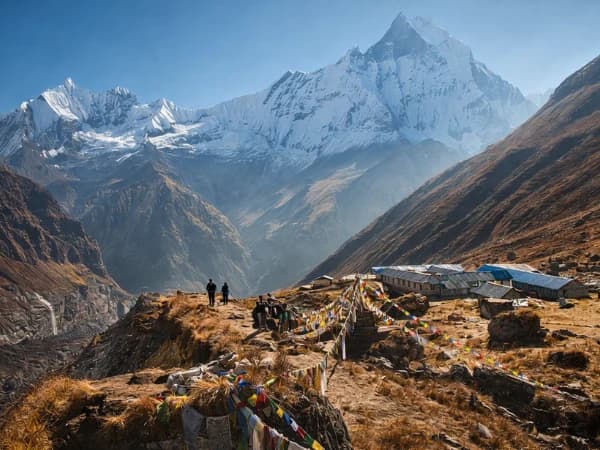
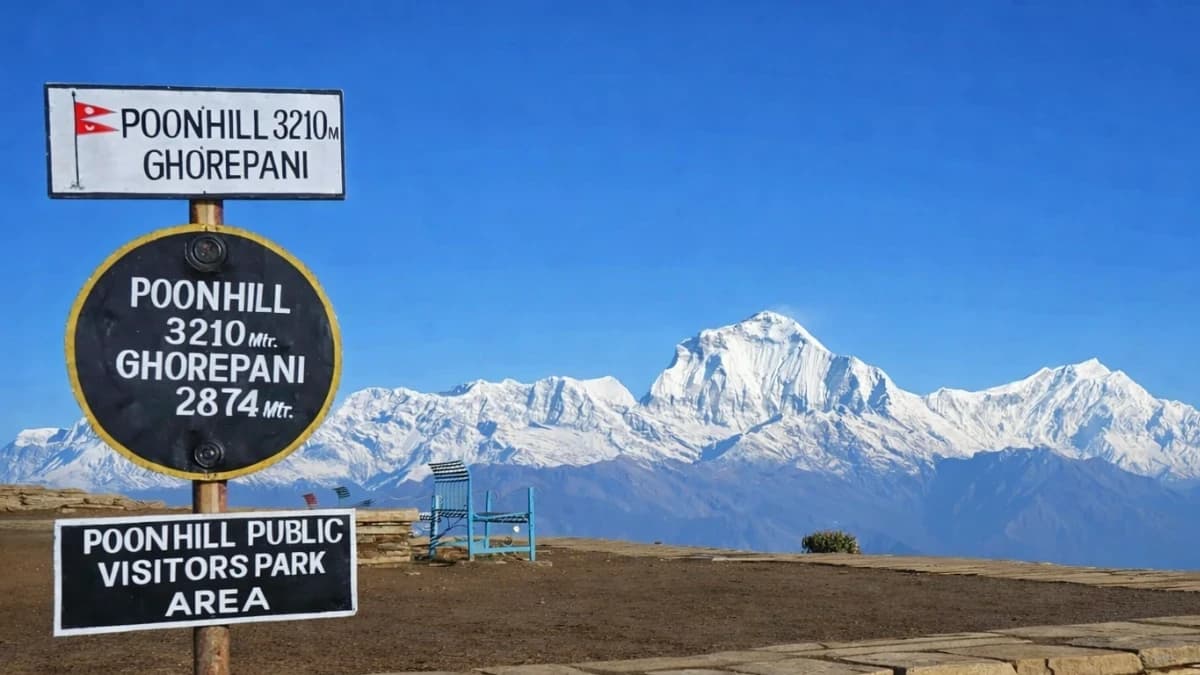
Sunrise view from Poon Hill with snow-covered peaks of the Annapurna Range and Dhaulagiri, seen from Ghorepani, Nepal.
Quick Overview
Duration6 Days
Trip GradeModerate
CountryNepal
Maximum Altitude3,210m / 10,531ft
Group Size2 - 20
StartsKathmandu
EndsKathmandu
ActivitiesTrekking
Best TimeSep to Nov and Mar to May

The sky is still dark when you leave the teahouse at Ghorepani. Torchlight bounces off stone steps ahead of you as other trekkers climb the same trail in the pre-dawn cold, breath rising in thin white clouds. Forty-five minutes later you reach the summit of Poon Hill (3,210m / 10,531ft) and the eastern horizon is already burning orange. Then the sun breaks. Dhaulagiri (8,167m) catches the first light and turns gold. Annapurna South follows, then Annapurna I, then the entire chain of peaks strung across the northern sky — Machhapuchhre, Hiunchuli, Annapurna III, Annapurna IV — all lit from below as if someone had set fire to the snow. The 360-degree panorama from this modest hilltop viewpoint is one of the most photographed sights in the Himalayas, and it takes less than a week to reach it.

This 6-day trek is one of Nepal's easiest high-altitude routes, designed for anyone who wants mountain views without extreme altitude or punishing daily distances. From Pokhara, you drive to Nayapul, climb through terraced farmland and rhododendron forest past Ulleri to the ridgeline village of Ghorepani, wake early for the Poon Hill sunrise, then descend through the trail villages of Tadapani and Ghandruk — one of Nepal's most beautiful Gurung settlements — before returning to Pokhara. You'll sleep in family-run teahouses, eat dal bhat cooked over wood fires, walk beneath prayer flags strung between ancient trees, and feel the warmth of communities that have welcomed travellers for generations. It is the perfect introduction to the Himalayas, designed by Shreejan Simkhada, whose family has been guiding people through these mountains since the 1960s.

What Makes This Trek Unforgettable

  • Watch sunrise from Poon Hill (3,210m / 10,531ft), a 360-degree viewpoint with uninterrupted views of Dhaulagiri, the full Annapurna massif and Machhapuchhre (Fishtail) — widely considered one of the finest mountain sunrises on earth
  • Complete one of Nepal's top treks in just 6 days, making it ideal for travellers with limited annual leave or those seeking a short trek that still reaches proper mountain country
  • Rated Easy to Moderate (2 out of 5), with no technical sections, no glacier crossings and a maximum altitude well below the danger threshold — perfect for first-time trekkers, families with children and trekkers over 50
  • Walk through the Gurung village of Ghandruk, where stone houses with slate roofs sit among terraced fields and the Gurung and Magar cultural heritage is palpable in the architecture, the food and the people
  • Trek through rhododendron forests that explode into crimson, pink and white blooms between March and May, one of the most spectacular spring displays in the Annapurna Conservation Area
  • Stay in genuine family-run teahouses along the trail, eating home-cooked Nepali food and meeting hosts who know every peak by name
  • All permits included (ACAP and TIMS), so you don't spend a day in Kathmandu queuing at government offices
  • Small groups of 2 to 20, always with a Nepal government well-trained guide who knows this trail intimately
  • Three tiers (Budget, Standard, Luxury) let you choose your comfort level without compromising on safety, expertise or the route itself
  • Every booking supports education for 70 children in rural Nepal through the Nagarjun Learning Center

6-Day Overview

Your journey begins and ends in Kathmandu, but the trek itself starts from Pokhara, Nepal's lakeside adventure capital, reached by a scenic drive through the middle hills. From Pokhara, a shorter drive takes you to Nayapul, the traditional trailhead on the western edge of the Annapurna Conservation Area. The first day climbs steadily through Tikhedhunga and Ulleri, where the stone staircase is the steepest sustained climb of the entire trek. By evening you're in the rhododendron belt, and by the following morning you've reached Ghorepani, the ridgeline village from which the pre-dawn climb to Poon Hill begins. After sunrise, the trail descends eastward through oak and rhododendron forest to Tadapani, a quiet settlement with evening views of Machhapuchhre. The final trekking day takes you down through terraced farmland to Ghandruk, one of Nepal's most photogenic Gurung villages, before you return to Nayapul and then Pokhara. By the end of day six, you're back in Kathmandu with mountain memories that will stay with you for years.

Before You Arrive

Please arrive in Kathmandu the day before your trek starts. This gives you time to recover from your international flight, meet your guide, and do any last-minute gear shopping in Thamel if needed. We arrange your airport transfer, so you can step off the plane knowing everything is sorted. Make sure your Nepal visa and trekking insurance are in order before you fly, and bring enough Nepali rupees for personal spending on the trail.

Online Briefing

After you book, we schedule a video call to walk you through everything: what to wear, what to pack, what the teahouses are really like, and anything else on your mind. This is also when you share your hotel preferences in Kathmandu and Pokhara so we can match the right accommodation to you. No question is too small. We'll also cover the layering system for this altitude range, how much cash to carry, and what WiFi and charging to expect on the trail.

Transport

All three tiers travel the same route: Kathmandu to Pokhara by road (approximately 6-7 hours), then Pokhara to Nayapul (about 1.5 hours) to reach the trailhead. The return follows the same route in reverse. The difference between tiers is the vehicle. Budget trekkers travel by local tourist bus or shared vehicle, which is comfortable, safe and well-used by Nepalis and travellers alike. Standard trekkers ride in a private tourist vehicle with more legroom and air conditioning. Luxury trekkers get a premium private vehicle with extra comfort for the long drive. There are no flights on this itinerary; everything is by road, which keeps costs down and gives you more of Nepal's countryside to enjoy through the window. For a full breakdown of what trekking in Nepal actually costs, see our complete cost guide.

Your Trek, Your Way

Every trek we run is arranged privately for your group. You won't be paired with strangers unless you choose to join a public departure. Whether you book as a solo trekker, a couple on your honeymoon, a family with children, or a group of friends, this itinerary belongs to you. Want to add a rest day in Ghorepani? Extend to include a visit to Fewa Lake in Pokhara or a sunrise drive up to Sarangkot? We can adjust. Our three tiers (Budget, Standard and Luxury) give you genuine choice over accommodation, meals, porter support and transport without affecting the route itself. Same expert guides. Same safety standards. Three comfort levels. Read more about what the price difference actually buys or explore our budget trekking guide.

Difficulty

We rate this trek Easy to Moderate (2 out of 5). The maximum altitude is 3,210 metres (10,531ft), which is well below the threshold where altitude sickness becomes a serious concern. There are no glacier crossings, no exposed ridgelines and no technical sections. The toughest stretch is the stone staircase from Tikhedhunga to Ulleri on day one, roughly 3,300 steps climbing through forest, but you'll be fresh and your guide will set an easy pace. Daily walking ranges from 4 to 6 hours over well-maintained trails. The trail passes through villages every hour or two, so you're never far from a teahouse, a cup of tea and a place to rest. If you can walk 5-6 hours a day on hilly terrain, you can do this trek. It's a favourite with beginners, families and anyone wanting a genuine Himalayan experience without the demands of higher-altitude routes.

Compare Our Three Packages

Feature Budget Standard Luxury
Price from USD $305 USD $420 USD $1,000
Meals on trek Not included (order and pay at teahouses) 3 meals daily + tea, seasonal fruits and 2L hot water All meals + all drinks (except alcohol), fruits and dry nuts
Meals in Pokhara Breakfast only at hotel Breakfast only at hotel Breakfast only at hotel
Room Shared teahouse room Private twin with attached bathroom (where available) Private deluxe with bed heater and attached bathroom (where available)
Porter Not included 1 porter per 2 trekkers (max 15-20kg) 1 porter per trekker (carry nothing yourself)
Guide 1 guide per group (assistant at 8+) 1 guide per 6 trekkers (assistant at 6+) 1 guide per 2 trekkers
Transport Local tourist bus / shared vehicle Private tourist vehicle Luxury private vehicle
SIM & Data SIM card only SIM with limited data SIM with unlimited data (see our SIM card guide)
Best for Backpackers and independent travellers Comfort trekkers, couples, families Premium experience seekers

Himalayas for Every Budget. Same expert guides, same safety, three comfort levels. Every tier includes all permits, a Nepal government well-trained guide, airport transfers and 24/7 emergency support. The only things that change are the comfort details. Read our full comparison of what the price difference actually buys or explore luxury trekking in Nepal. Note: in Pokhara, only breakfast is included at your hotel across all tiers; other meals in Pokhara are at your own expense and choice, giving you the freedom to explore the lakeside restaurants, try Nepali street food and find your own favourites. Meals during the Kathmandu-Pokhara drive are also not included, for the same reason. Check our guide on WiFi and charging on the trail so you know what to expect on the Poon Hill route.

Your Trek, Our Family

The Everest Holiday is not a faceless agency. It's a family.

Hari Lal Simkhada, Shreejan's grandfather, arranged logistics and supported Himalayan expeditions in the 1960s and 1970s, back when reaching Nepal's high mountains required weeks of approach marching and a willingness to solve problems nobody had solved before. Ganesh Prasad Simkhada, Shreejan's father, has held senior positions in Nepal's tourism and mountaineering institutions, helping shape the industry that now brings over 200,000 trekkers to Nepal each year.

Today, Shreejan Simkhada runs The Everest Holiday as CEO and third-generation guide. He personally designs every itinerary, selects every guide, and remains available to trekkers before, during and after their trip. This is not a company where you are handed off to a call centre. When you message us on WhatsApp (+977 9810351300), you are talking to the family.

Our Credentials

  • 196 TripAdvisor Reviews, rated 4.9 out of 5, TripAdvisor Travellers Choice 2024
  • 108+ Google Reviews, rated 4.9 out of 5
  • TAAN Certified, Member #1586, Government Registration: 147653/072/073
  • Secure 10% deposit processed through Himalayan Bank Limited, Nepal's most trusted commercial bank
  • Himalayas for Every Budget: three tiers, one standard of care
  • Three generations of Himalayan guiding since the 1960s

Solo Trekkers Welcome

Most of our trekkers book alone. It's the single most common booking type we receive, and if you're wondering whether it's strange to trek solo in Nepal, it isn't. Nepal's mandatory guide rule means nobody treks without professional support, and our small groups (2-20 people) mean you'll be walking with a handful of like-minded travellers, not a convoy. The Poon Hill trek is particularly popular with solo travellers because of its shorter duration and lower difficulty — you can fit it into a ten-day holiday from the UK and still have time to explore Pokhara and Kathmandu on either side. You can book a private departure if you prefer to walk with just your guide, or join a public group to share costs and meet people. Either way, you are not alone out there. Read our guide on Nepal travel etiquette before you go, and our notes on tipping your guide and porter. Our solo female trekking guide covers safety, social dynamics and practical tips that apply to everyone, not just women.

Difficulty

Easy to Moderate (2 out of 5). Here is what that means in practical terms for the Poon Hill trek.

The maximum altitude is 3,210 metres (10,531ft) at the Poon Hill viewpoint. You'll only be at this height for an hour or so during the sunrise visit — the overnight stop at Ghorepani sits at approximately 2,860 metres. At these altitudes, mild headaches are possible, but serious altitude sickness is very rare. Our guides still carry a pulse oximeter and monitor you throughout, because safety is the same regardless of how easy the route is rated. If you have concerns about altitude, read our guide on Diamox and altitude medication.

The terrain is well-maintained and clearly marked throughout. The biggest physical challenge is the stone staircase between Tikhedhunga and Ulleri — roughly 3,300 steps ascending through forest. It's steep, but your guide will keep the pace comfortable, and there are teahouses along the way where you can stop for tea. The descent from Tadapani to Ghandruk includes uneven stone steps that can be hard on the knees, so trekking poles are recommended.

Daily walking hours range from 4 to 6 hours, with the longest day being the trek to Ghorepani. You don't need previous trekking experience, though some fitness preparation will make the days more enjoyable. If you can comfortably walk up and down hills for 5 hours, you'll be fine. This trek is regularly completed by children, by trekkers in their sixties and seventies, and by people who have never spent a night in the mountains before. Read our beginner's guide if you're planning your first Himalayan trek.

Trek With a Purpose — Changing the World, One Step at a Time

In 2019, Shreejan Simkhada and Shamjhana Basukala founded the Nagarjun Learning Center in one of Nepal's most remote communities. Today, 70 children receive free education and hot meals every school day at the centre's flagship branch in Saldum Village, Dhading District. More than 600 people have received free medical care through annual health camps. 275+ women have been reached through support and skills programmes. Seven learning centres now operate across Nepal.

The Nagarjun Learning Center is verified and listed on the UN Partner Portal.

When you trek with us, you are not just walking through the mountains. You are building futures. A portion of every booking goes directly to the centre, funding teachers, meals and internet access for children who had none before. Every trek also upholds our commitment to responsible trekking and porter welfare. You can learn more at nepallearningcenter.com.

What Trekkers Say About This Trek

"We did the Poon Hill trek with Shreejan and it was perfect. The sunrise over the Annapurna range brought tears to my eyes. Our guide Manoj was brilliant — funny, knowledgeable, and always made sure we were comfortable."

— Emma Richardson, United Kingdom (TripAdvisor, 5 stars)

"Our guide Manoj was brilliant. The rhododendron forests were in full bloom and the hot springs at the end were a perfect way to celebrate finishing the trek."

— Google Review, 5 stars

"Our guide Manoj was brilliant. The rhododendron forests were in full bloom and the hot springs at the end were a perfect way to celebrate finishing the trek."

— Google Review, 5 stars

"The sunrise from Poon Hill over the Annapurna range was worth waking up at 4am. Short trek but packed with beauty. Perfect for those with limited time."

— TripAdvisor Review, 5 stars

"Our guide Manoj was brilliant. The rhododendron forests were in full bloom and the hot springs at the end were a perfect way to celebrate finishing the trek."

— Google Review, 5 stars

Read all 320+ reviews →

Short Itinerary
Day 01: Drive from Kathmandu to Pokhara (820m / 2,690ft)
Max Altitude: 820m / 2,690ft
Day 02: Drive to Nayapul, trek to Ulleri (1,960m / 6,430ft)
Max Altitude: 1,960m / 6,430ft
Day 03: Trek from Ulleri to Ghorepani (2,860m / 9,383ft)
Max Altitude: 2,860m / 9,383ft
Day 04: Poon Hill sunrise (3,210m), trek to Tadapani (2,630m / 8,629ft)
Max Altitude: 2,630m / 8,629ft
Day 05: Trek from Tadapani to Ghandruk, drive to Pokhara (820m / 2,690ft)
Max Altitude: 820m / 2,690ft
Day 06: Drive from Pokhara to Kathmandu (1,400m / 4,593ft)
Max Altitude: 1,400m / 4,593ft
Expand
Detailed Itinerary
Day 01:

The drive from Kathmandu to Pokhara follows the Prithvi Highway for approximately 200 kilometers through some of Nepal's most varied middle-hill scenery. The road traces the Trisuli River gorge past terraced farmland, subtropical forest, and market towns where the chai is always fresh and the dal bhat is always better than you expect from a roadside kitchen. The journey takes seven to eight hours depending on traffic and conditions. Budget trekkers travel by local tourist bus, standard by private vehicle, and luxury by premium private transport.

Arriving in Pokhara, Nepal's lakeside adventure capital, the first thing you'll notice is the warmth. At 820 meters, Pokhara sits in a subtropical valley framed by the white wall of the Annapurna range to the north. Fewa Lake reflects the peaks on still mornings, and the lakeside district offers some of the best restaurants, cafes, and sunset viewpoints in Nepal. Your evening is free to explore.

Breakfast is included at your Pokhara hotel across all tiers. All other meals in Pokhara are at your own expense, giving you the freedom to discover the city's food scene. Your guide can recommend everything from authentic Nepali momos to lakeside pizza. If you've arrived early, consider visiting Sarangkot for a sunset panorama over the Annapurna range.

Poon Hill Trek Ghorepani — 6 Days — Full Interactive Route Map on Google Maps

Max Altitude: 820m / 2,690ftAccommodation: Hotel in PokharaDuration: 7-8 hourDistance: 210 km/130 milesElevation: 580 m (1,902 ft)
Day 02:

A short drive from Pokhara brings you to Nayapul, the trailhead for the Poon Hill trek. The trail follows the Modi Khola river through Birethanti, a pretty riverside village where your ACAP permit is checked, and then begins climbing through terraced farmland and scattered Gurung homesteads. The path is well-maintained stone steps for most of the way, and the altitude gain is gradual enough to feel comfortable even for first-time trekkers.

Ulleri is reached via a famous stone staircase of roughly 3,000 steps that climbs directly from the river valley to the village. It sounds daunting, and it is not nothing, but the steps are even, the pace is steady, and the views that open up as you climb are constant motivation. By the time you reach Ulleri at 1,960 meters, you'll have earned your first mountain panorama: Annapurna South and Hiunchuli rising above the forested ridgelines to the north.

Your teahouse in Ulleri sits on a terrace with views down the valley. The dining room is warm, the dal bhat is hot, and the staff are welcoming. This is a popular first-night stop, so expect to share the lodge with other trekkers. The atmosphere is friendly and the conversations are full of anticipation about the Poon Hill sunrise that awaits in two days' time.

Max Altitude: 1,960m / 6,430ftMeals: Breakfast, Lunch & DinnerAccommodation: Teahouse in UlleriDuration: 3-4 hoursDistance: 8 km / 5 milesElevation: 501 meters (1,650 ft)
Day 03:

Today you climb through one of the most beautiful forest corridors in the Annapurna region. The trail from Ulleri enters dense rhododendron and oak forest that, in spring (March to May), explodes in crimson, pink, and white blooms. The canopy closes overhead, sunlight filters through in shafts of green and gold, and the only sounds are birdsong and your own footsteps on the stone path. You may spot Himalayan monals, Nepal's national bird, their iridescent plumage flashing in the undergrowth.

The trail passes through Banthanti, a small cluster of teahouses in a forest clearing, before continuing uphill through increasingly open terrain. As you gain altitude, the rhododendron trees give way to alpine meadows, and the mountain panorama begins to unfold. The Annapurna Conservation Area protects this entire corridor, and the forests feel ancient and untouched.

Ghorepani sits at 2,860 meters on a saddle between two ridges, with views of Dhaulagiri (8,167 m) to the west and the Annapurna range to the north. The village is the base for the famous Poon Hill sunrise viewpoint, and the teahouses are busy with trekkers preparing for an early start tomorrow. Your guide will brief you on the plan: headlamps on, warm layers, and a forty-five-minute climb to the viewpoint before dawn. Tonight, set your alarm early and go to bed as soon as the sky darkens. Tomorrow morning is what you came for.

Max Altitude: 2,860m / 9,383ftMeals: Breakfast, Lunch & DinnerAccommodation: Teahouse in GhorepaniDuration: 3-4 hoursDistance: 8-11 km/6.5 milesElevation: 1,320 meters /4,330 feet
Day 04:

You wake before the sun. Headlamp on, down jacket zipped, hands wrapped around a cup of tea from the teahouse's kitchen. The trail to Poon Hill climbs steadily from Ghorepani through dark forest, and by the time you reach the viewpoint at 3,210 meters, the eastern horizon is glowing orange. Then it happens. The sun clears the ridge, and the entire Annapurna range ignites. Dhaulagiri, Tukuche, Nilgiri, Annapurna I, Annapurna South, Machhapuchhre: peak after peak turns from blue shadow to blazing gold in a panorama that stretches nearly 300 degrees. It is widely considered one of the best sunrise views in the Himalayas, and it is impossible to photograph without putting the camera down at least once just to stand there and take it in.

After sunrise, you descend back to Ghorepani for breakfast and then continue east toward Tadapani. The trail drops through rhododendron forest, climbs over a ridge, and descends again through oak and bamboo. The walking is undulating but never extreme, and the mountain views accompany you for most of the day. You pass through Deurali (not the same Deurali as on the ABC route) and through patches of forest where langur monkeys watch from the branches.

Tadapani sits at 2,630 meters on a forested ridge with views of Machhapuchhre and Annapurna South. The teahouse is peaceful, and the evening light on the peaks is spectacular. Many trekkers say Tadapani has the best mountain views of the entire trek, but they usually say that before they see Ghandruk tomorrow.

Max Altitude: 2,630m / 8,629ftMeals: Breakfast, Lunch & DinnerAccommodation: Teahouse in TadapaniDuration: 5-6 hoursDistance: 8 km/4.9 milesElevation: 1260 m/4,133 ft.
Day 05:

The final morning on the trail descends through forest and terraced farmland to Ghandruk, one of the most beautiful Gurung villages in the Annapurna region. Stone houses with slate roofs sit on a wide shelf overlooking the Modi Khola valley, with Machhapuchhre filling the northern sky and terraced fields cascading down the hillsides. The village has a small museum documenting Gurung life, a traditional gompa, and elderly women spinning wool on their porches. Take your time here. Ghandruk deserves it.

From Ghandruk, the trail continues downhill to Nayapul, where your vehicle is waiting for the ninety-minute drive back to Pokhara. The transition from trail to road is always bittersweet: your feet are grateful, but something in you wants one more ridge, one more cup of teahouse tea, and one more sunrise. Back in Pokhara, the rest of the day is yours. Many trekkers book a paragliding flight over Fewa Lake, visit Sarangkot, or simply sit lakeside with a cold drink and process what they've experienced.

Breakfast is included at your Pokhara hotel. Lunch and dinner are your own choice, giving you freedom to explore the city's excellent restaurants. See our guide on tipping your guide and porter for what's appropriate.

Max Altitude: 820m / 2,690ftMeals: Breakfast, Lunch & DinnerAccommodation: Hotel in PokharaDuration: 4 hoursDistance: 52.1 km/32.3 miles
Day 06:

After breakfast at your Pokhara hotel, you drive back to Kathmandu along the Prithvi Highway. The seven to eight hour journey follows the same route as Day 1, but the experience feels different now. You've walked through the mountains you're watching from the car window, seen the Poon Hill sunrise, eaten dal bhat in Gurung teahouses, and carried the Himalayas in your legs for four days. The peaks on the horizon are no longer scenery. They're memories.

The drive includes stops at riverside restaurants for lunch (at your own expense). Back in Kathmandu, you'll freshen up before the farewell dinner with your guide. This is where achievement certificates and company T-shirts are given, stories are retold, and photos are compared. If you have time, your guide can recommend temples, markets, and cultural sites worth visiting, or consider extending it with a Dhulikhel-Namobuddha day hike or a trip to Chitwan National Park.

Six days. One sunrise that changes everything. The Poon Hill trek proves that you don't need three weeks or extreme altitude to experience the Himalayas at their most powerful. You walked in, you saw, and you'll carry it home.

Interactive Route Map

Explore the full trek route on our interactive Google Map. Click markers for altitude details at each stop.

Open Full Route Map in Google Maps

Max Altitude: 1,400m / 4,593ftMeals: BreakfastDuration: 7-8 hoursDistance: 210  km/  130  milesElevation: 580 m (1,902 ft)
Couldn't find what you're after?Reach out to our travel experts.
Customise Trip
Route Map
Poonhill Trek
Altitude Chart
Poonhill Trek - 6 Days
Availability
Book your own private small group trip

Discounts are determined exclusively by the size of your group. We do not add additional members to your group.

hbl logo
Secure Payment by Himalayan Bank.

Equipment Lists

Only pack what’s needed for the trek to travel light and comfortably. You can store your excess luggage at The Everest Holiday for free. Porters will carry your main trekking bag, but the weight limit is 10 kg for each trekker. Since one porter carries the luggage for two people, we suggest that you and a trekking partner share one large duffel bag (over 60 Liters).

  • Sun hat (wide-brimmed)
  • Beanie (for warmth)
  • A neck gaiter or buff (for warmth and sun protection)
  • Sunglasses with UV protection
  • Insulated gloves or mittens (for cold weather)
  • Waterproof gloves (for wet conditions)
  • A thick-wool or synthetic pair of moisture-wicking socks
  • waterproof hiking boots with ankle support and excellent traction
  • Sandals (for camp use or river crossings)
  • Gaiters protect
  • Moisture-wicking t-shirts (short and long sleeves)
  • Thermal base layer (for colder conditions)
  • Fleece jacket and down jacket (Mandatory)
  • Lightweight puffy jacket (for extra warmth)
  • Waterproof and windproof jacket (Gore-Tex or similar)
  • Raincoat
  • Lightweight, breathable long-sleeve shirt
  • Polypropylene underwear (four)
  • Quick-drying pants/trousers (convertible or full-length)
  • Insulated pants (for colder conditions)
  • Lightweight cotton pants
  • Wear long underwear or thermal leggings when it is cold.
  • Two pairs of thermal/trekking trousers (pants)
  • Biodegradable bar soap
  • Toothbrush and toothpaste
  • Medium-sized drying towel
  • Wet wipes or hand sanitizers
  • The toilet paper is stored in a Ziplock bag.
  • Feminine hygiene products
  • Travel-sized shampoo
  • Nail clippers
  • Small mirror
  • A duffel bag with a capacity of over 60 litres is intended for porters, with one duffel bag for every trekker.
  • An individual's daypack or backpack with a 20- or 30-litre capacity should be plenty.
  • Adjustable and lightweight poles (preferably collapsible)
  • A two-litre water bladder or bottle (with a protective cover for cold climates)
  • Use water purification methods such as purification tablets, filter bottles, or UV filters.
  • Camera/smartphone (extra memory cards and batteries)
  • A portable charger, spare batteries, or a battery pack
  • Two-pin charging plug
  • Basic first aid supplies include band-aids, antiseptic wipes, pain relievers, and Diamox (which is used to prevent or lessen symptoms related to mountain sickness).
  • Personal medications (inhalers, allergy meds, etc.)
  • Few passport-size photos
  • Passport photocopies
  • Notebook and pen
  • Binoculars
  • Basic first aid kit (band-aids, antiseptic wipes, pain relievers, etc.)
  • Diamox (for altitude sickness prevention/relief)
  • Personal medications (inhalers, allergy meds, etc.)
  • Water purification (tablets, filter bottle, UV filter)
  • Energy bar
  • Lightweight headlamp (with adjustable brightness)
  • Face wipes
  • An extra pair of batteries
Essential Information

Poon Hill Trek—6 Days Information

Welcome, Arrival, and Start

When you get to Tribhuvan International Airport (KTM), our agent will be waiting for you in the arrivals area. They will be carrying a sign with your name on it and will greet you in a loving, traditional way with a marigold garland or a Khada, which is a white ceremonial scarf that stands for respect and good luck. After a short introduction, we will be taken to a private car that will take you to the hotel of your choice in Kathmandu.Please make sure you get to Kathmandu at least one day before your hike so you can get ready and go over the details. On the first day, we'll go on a tourist bus and have a beautiful 6–8 hour journey to Pokhara. You can arrange private transportation or flights for an extra fee.

Lodging

During the trek, you will stay in small, family-run lodges called "tea houses," which are spread out along the road. The rooms are simple but cozy, with twin beds, warm blankets, and shared bathrooms.  In  lower  villages,  tea  houses  are  cozier  and  may  even  have  power  and  charging ports. As you go up, the amenities get simpler but still available. The mood of these teahouses is unique;  the  dining  rooms  have  fireplaces,  the  Sherpas  are  friendly,  and  you  can  meet  other trekkers from all over the world. At each stop, there is more than just a place to sleep. There is also a chance to learn about the culture and get a real taste of mountain life.

Each tier (Budget, Standard, Luxury) includes different levels of accommodation, meals, and extras. See the What's Included section for the full breakdown.

Food

This trek reaches high altitudes near the world’s tallest peaks, so your body needs plenty of carbohydrates, proteins, and other nutrients. While food options may be limited, we will ensure you have enough healthy and tasty meals throughout the trek. This package includes three standard meals throughout the trek. The menu primarily includes traditional Nepali, Asian, and Western dishes on the trek. We highly recommend sticking to healthy and hydrating options like fresh vegetables, green tea, hot lemon, ginger tea, and garlic soup. For a hearty and energizing meal, try the local favourite, Dal Bhat Tarkari (lentil soup, rice, and vegetable curry). The package does not include personal expenses such as alcoholic drinks, tea, coffee, cold drinks, or snacks at tea houses or cafes.

No meals are included in Pokhara except for breakfast at your hotel, and no meals will be provided during the drive between Kathmandu and Pokhara, as there are many dining options available on the highway and in Pokhara, allowing you to choose your preferred meals.

Baggage

We provide one porter for every two trekkers. Each trekker’s luggage limit is 10 kg, so a porter will carry no more than 20 kg in total. We never overload our porters. You will still need to carry a small backpack for your valuables. We recommend bringing only essentials. Extra baggage can be stored for free at your hotel or with us. All luggage and gear will be checked before the trek begins.

Important Things and Facilities

Water

You can buy bottled water from shops along the trekking route or drink boiled or filtered water provided at the lodges. We strongly recommend bringing a reusable water bottle and refilling it with boiled water to help reduce plastic waste. Avoid drinking untreated tap, river, or well water, as it may cause sickness. For added safety, carry water purification tablets or buy them at local shops on the trail. To avoid altitude sickness and keep your energy up on your walk, it's vitally crucial to drink plenty of water at high altitudes.

Travel Essentials

Visa

Foreigners require a visa to enter Nepal, but Indians don't. Most people can get a visa when they arrive at Kathmandu International Airport. The current fee is USD 50 for 30 days, payable in cash. Citizens of China and SAARC countries receive a free visa. Also, we recommend you to inform your country embassy or consulate of your visit to Nepal and your travel partner here. 

Travel insurance

This trek is easy in terms of hiking, but it takes place at high altitudes, so there is a small risk of altitude sickness and other hazards. Therefore, travel insurance is required. Your policy must cover medical expenses and emergency helicopter rescue up to an altitude of 4500 metres. We ask our clients to provide detailed insurance information within a week of booking. In case of an emergency, we will use your insurance details to arrange a quick evacuation and transfer to medical facilities. 

Currency Exchange

The Nepali Rupee (NPR) is the country's official currency; one US dollar is equivalent to around 130 NPR.  In Kathmandu, you may find banks and approved money exchange centres where you can exchange major foreign currencies. ATMs are widely available to withdraw NPR, but extra service fees may apply. Make sure your notes are new and undamaged, as old or torn bills may be refused. Only the 100 INR note from India is legally accepted in Nepal. It’s best to exchange money in Kathmandu before heading to trekking regions, as exchange options in remote areas are limited.

Extra Expense

While our package covers most of your expenses during the trek, you will need to budget for some personal items like meals and accommodation in Kathmandu, visa fees, snacks, hot showers, personal equipment, tips for the crew, etc. We recommend you budget approximately $20 USD per day for these personal expenses during the trek.

Trek Season and the Weather

The Annapurna Base Camp Trek is open from March to May and September to November, and it is a safe season for trekking. Spring (March–May) is ideal, with clear skies, blooming rhododendrons and views of Mt. Annapurna. Daytime temperatures range from 18 °C to 24 °C, dropping to -4 °C at night.  Autumn  (September–November)  also  offers  stable  weather  and  beautiful  mountain views, with temperatures from 15 to 25°C and nighttime lows around -6 °C. Snow increases from December, making higher trails difficult to cross.

A Typical Day on the Hike

Around 7 AM, you get a big breakfast to start your day. The normal trekking day lasts 4 to 6 hours, with a lunch break along the way. You can rest or explore in the evenings and then be briefed on the next day's plans.

Reservations and Rules

Personal trek

We can only provide a personal trek, so you will only be trekking with your group. We will never add strangers to your treks. All the treks are customizable per your schedule.

Individual-Group bookings 

Our treks are organised with a minimum of 2 people, so if anyone is alone and does not have a friend or family joining them, we can organise a group trek open for all. If you prefer to join a group, we can also help you connect with other trekkers. Once you confirm, your group trek will be posted on our website, so others can join too. Our policy is designed to transform every trek into your own personal holiday in the Himalayas.

Trust trek booking

The Everest Holiday is a registered and bonded trekking operator, ensuring a secure booking process. We are proudly members of the Trekking Agency Association of Nepal (TAAN) and the Nepal Mountaineering Association (NMA). Our Founder, Mr. Ganesh Simkhada, has held senior positions in the Nepal Tourism Board (NTB) and former General Secretary of the Nepal Mountaineering Association (NMA). To confirm your booking, we require a 10% advance payment.

Payment options include the Himalayan Bank online portal (on our website), major credit cards, bank transfers, Wise, and Western Union. After you arrive in Kathmandu, you can pay the remaining balance. Please send us your important travel documents, such as a passport copy, within one week of booking. Please make sure your passport has a minimum of 6 months of validity remaining at your arrival date in Nepal.

Last-minute booking

We recommend booking your trek in advance. However, we also offer a last-minute booking option, which requires full payment 24 hours before departure. For the last-minute booking, please contact Shreejan at +977-9810351300 or email us at info@theeverestholiday.com. Please note that last-minute treks may face delays due to circumstances beyond our control. 

Flexible Schedule

Our trip schedule is determined by your travel date, and you can make any changes to it. If our scheduled trek dates don't work for you, please let us know, and we will be happy to arrange a trip according to your time and schedule.

Trip Extension

You can easily extend your stay with other adventures. We can arrange exciting activities for you, such as a jungle safari (Chitwan and Bardiya), Bungee jumping (Pokhara, Bhote koshi,  Kushma),  Rafting  (Bhote  koshi,  Trishuli,  and  Seti  river)  and  kayaking(Trishuli,  and Pokhara), paragliding (Pokhara and Kathmandu), zip flying (Kathmandu, Pokhara and Kushma), canyoning (Pokhara and Sukhuta Beach), and Hot ballooning (Pokhara), according to your interests. We can also set up sightseeing tours around the Kathmandu Valley if you're interested in culture and history.

These tours will take you to UNESCO World Heritage sites like Bhaktapur Durbar Square, Patan Durbar Square, Kathmandu Durbar Square, Swayambhunath (Monkey Temple), Boudhanath  Stupa,  Changunarayan  Temple,  and  Pashupatinath  Temple.  We  suggest  a  trip  to Nagarkot  and  Dhulikhel,  hill  stations  just  outside  of  Kathmandu,  around  sunrise  for  a  serene getaway. We can also set up spiritual trips for Buddhists and Hindus that take you to temples, stupas, monasteries, and meditation centres. When you're booking a trip, please have a look at our ADD-ON package for an amazing adventure during the trek.

Ecotourism practices

We request that you join our eco-friendly trekking practice as part of our strong commitment to protecting the fragile beauty of the Everest region. Every guest will get their own eco-waste bag at the beginning of our trip. Please use this bag to collect all of your personal trash that can't be composted, like snack wrappers, plastic bottles, and batteries.Please don't leave anything on the trail. Instead, carry this bag with you as we go down, and our guides will show you where to find the public trash cans and recycling bins where you can properly dispose of it. We need your help to keep the Himalayas clean and beautiful for future generations.

TEH Family 

We are a family firm that has been in the tourism business in Nepal for three generations. We believe that all of our employees and teams are family. we started as porters and now run an agency. Our professional and experienced guides and Sherpas will be with you the whole time to make sure your trek is safe and memorable. They know how to do first aid in the bush and rock climbing and how to stay safe in the mountains. They also speak good English. They are from the upper Himalayas, so they know the area well. We take care of their insurance, food, housing, and medical. Please treat our workers like family, and don't hesitate to ask for help or have questions at any time.

Trip conclusion 

Farewell Dinner 

We will celebrate our successful trek with a farewell dinner in Kathmandu after the trek. This is a great opportunity to share stories from your adventure and provide us with your feedback. We will  also  present  you  with  a  certificate  of  achievement  to  recognise  your  incredible accomplishment. 

Departure 

To arrange your airport transfer, please let us know your hotel name, room number, and flight departure details. We will take you from your hotel to Tribhuvan International Airport so you may catch your trip home. We sincerely hope you had an amazing journey and hope to see you again soon for another trip in Nepal. 

Tipping culture 

Tipping is a common practice in Nepal. We recommend giving a group tip to your guide and porters at the end of the trek. The amount is up to you and can depend on the quality of service, trip length, your budget, and the overall cost of the trek.

FAQs

What is the Poon Hill Trek?
The Annapurna area is known for its short, beautiful hikes. Poon Hill (3,210 m) is famed for its vistas of the Himalayas at daybreak.

How long does the journey take?
The normal trip lasts six days, which includes getting to and from Pokhara.

What mountains can I view from Poon Hill?
You  can  see  several  more  peaks,  such  as  Annapurna  South,  Machhapuchhre  (Fishtail), Dhaulagiri, and Himchuli.

Do I need to have done hiking before?
No, the Poon Hill walk is good for beginners. Being fit is all you need.

How many hours do I walk every day?
Usually, 4 to 6 hours a day on stone steps and pathways that go up and down slowly.

Do I need to train before the trek?
To get ready, do some light aerobics, practice hiking, or just walk regularly with some hills.

What permissions do you need to go on the Poon Hill trek?
You  require  the  Trekkers'  Information  Management  System  (TIMS)  card  and  the  Annapurna Conservation Area Permit (ACAP).

Where can I acquire the permits?
You may get both ACAP and TIMS at the Nepal Tourism Board office in either Kathmandu or Pokhara.

How much do the licenses cost?
ACAP: NPR 3,000 for foreigners and NPR 1,000 for people from SAARC countries.
TIMS: NPR 2,000 for foreigners and NPR 1,000 for SAARC nationals.

Do I need insurance to go on the Poon Hill trek?
Yes, it is strongly suggested that you have insurance that covers hiking and medical situations.

Do you need insurance for high-altitude evacuation?
Not literally, considering Poon Hill is less than 3,500 m high, but it's better to be cautious than to regret it.

Do I need a visa to go to Nepal?
Yes, all foreigners require a visa, which can be obtained at the airport in Kathmandu or applied for online as an e-visa.

Is it necessary to have a guide?
No, however, hiring a guide makes your experience better and keeps you safe on the trek.

Is it possible to employ a porter?
Yes, porters can carry your belongings, allowing you to hike comfortably.

How much should I give guides and porters as a tip?
Tips are not set in stone, but a good rule of thumb is to give 10–15% of the cost of the hike.

What is the Poon Hill Trek?
The Poon Hill Trek is a 6-day trek through the Annapurna region of Nepal. It takes you through rhododendron forests, traditional Gurung and Magar villages, and up to Poon Hill viewpoint at 3,210m for a sunrise panorama of Dhaulagiri (8,167m), Annapurna South, Machhapuchhre (Fishtail), and the entire Annapurna range.

How difficult is the Poon Hill Trek?
Rated Easy to Moderate. The highest point is 3,210m, well below where serious altitude sickness typically occurs. You walk 4-6 hours per day on well-maintained trails. No technical climbing involved. Reasonably fit people with no trekking experience can complete this trek.

What is the best time for the Poon Hill Trek?
Spring (March to May) when rhododendrons bloom and autumn (September to November) when skies are clearest. Winter is cold but offers excellent visibility. Monsoon (June-August) brings rain and leeches.

How high does the trek go?
The highest point is Poon Hill viewpoint at 3,210m / 10,531ft. You sleep at Ghorepani (2,860m) the night before the sunrise hike.

What food is available?
Teahouses serve Dal Bhat (unlimited refills), fried rice, noodles, pasta, momos, pancakes, porridge, and eggs. All freshly cooked. Dal Bhat is the best value and most energising option.

Is the water safe?
Do not drink tap water. Bottled water available at every stop, or refill a reusable bottle with boiled water from teahouses. Carry purification tablets as backup.

How do I book?
Pay a 10% deposit through Himalayan Bank Limited’s secure online portal on our website. Balance due 60 days before departure. We also accept bank transfer via Wise.

What is the cancellation policy?
60+ days: full deposit refund minus USD 50 fee. 30-60 days: 50% refund. Under 30 days: no refund but we will try to reschedule.

Can I trek solo?
Yes. Minimum group size is 1 person. Solo trekkers welcome with their own guide and porter.

Do I need to be very fit?
Basic fitness is enough. If you can walk uphill for 2-3 hours, you will manage. The stone steps between Tikhedhunga and Ghorepani are the most demanding — about 3,300 steps over 3-4 hours.

Do I need previous trekking experience?
No. Poon Hill is one of the best first-time treks in the world.

How should I prepare?
Walk regularly for 4-6 weeks, gradually increasing distance. Climbing stairs with a daypack is excellent preparation.

What permits do I need?
Two: the Annapurna Conservation Area Permit (ACAP) and the TIMS card. Both are included in our package.

Can I arrange permits myself?
Yes, at checkpoints, but it is much easier to arrange through us in advance.

Is travel insurance mandatory?
Yes. Your policy must cover medical expenses and emergency helicopter evacuation.

What visa do I need?
Most nationalities get a visa on arrival at Kathmandu airport. USD 50 for 30 days. Indians do not need a visa.

Do I need to be very fit?
Basic fitness is enough. If you can walk uphill for 2-3 hours, you will manage. The stone steps between Tikhedhunga and Ghorepani are the most demanding — about 3,300 steps over 3-4 hours.

Do I need previous trekking experience?
No. Poon Hill is one of the best first-time treks in the world.

How should I prepare?
Walk regularly for 4-6 weeks, gradually increasing distance. Climbing stairs with a daypack is excellent preparation.

What permits do I need?
Two: the Annapurna Conservation Area Permit (ACAP) and the TIMS card. Both are included in our package.

Can I arrange permits myself?
Yes, at checkpoints, but it is much easier to arrange through us in advance.

Is travel insurance mandatory?
Yes. Your policy must cover medical expenses and emergency helicopter evacuation.

What visa do I need?
Most nationalities get a visa on arrival at Kathmandu airport. USD 50 for 30 days. Indians do not need a visa.

Is a guide mandatory?
Yes. Since 2023, Nepal law requires all trekkers to have a licensed guide. Our guides are TAAN-certified and speak fluent English.

Will I have a porter?
Standard and Luxury packages include porters (one per two trekkers, max 10 kg each). Budget trekkers carry their own bags.

Where do I sleep?
In local teahouses with twin beds and blankets. Hot showers, Wi-Fi, and charging available at most lodges for a small fee.

Are there toilets?
Yes. All teahouses have toilets. Bring your own toilet paper.

What is the weather like?
Spring: warm days, rhododendrons blooming. Autumn: clearest skies, best views. Winter: cold but excellent visibility. Monsoon: warm but wet.

Will I see the mountains?
80-90% chance of clear sunrise views in autumn and winter.

What should I pack?
Waterproof hiking boots, layered clothing, warm hat, gloves, sunglasses, sunscreen, daypack, headlamp, and reusable water bottle. Full list provided after booking.

Can I rent gear in Kathmandu?
Yes. Thamel has dozens of gear shops. Down jackets provided by The Everest Holiday on all tiers.

How do I get to the trailhead?
We drive from Pokhara to Nayapul (1.5 hours). If flying into Kathmandu, we arrange transport to Pokhara.

Do I need to fly to Lukla?
No. Poon Hill is entirely road-accessible. No domestic flights needed.