Trek Highlights
- 16-day private trek combining the Annapurna Circuit with the side trip to Tilicho Lake (4,919m), one of the highest accessible lakes in the world.
- Two acclimatisation rest days built around the Tilicho side trip, which is what makes the higher altitude exposure safe before the Thorong La crossing.
- The full classical AC route: Chame to Manang to Thorong La (5,416m) to Muktinath to the Mustang-side descent. The Tilicho extension adds the lake but not the demanding kora a separate Tilicho-only trek would require.
- Private guide and porter ratio that does not change based on group size. No shared-group surcharge gimmicks.
- 10% deposit to lock dates, balance paid in person in Kathmandu. No full prepayment required to a foreign trekker you have never met.
- Every booking helps fund our Nagarjun Learning Center work at Saldum, where 70 children are taught by one dedicated teacher.
Why I built this trek the way I did
I am Shreejan, the founder of The Everest Holiday. The 16-day AC plus Tilicho is the route I send people on when they have already decided to do the Annapurna Circuit and want the most rewarding side trip on the route. Tilicho Lake at 4,919m is the highest accessible lake on the Annapurna route, and the 2-day side trip from Manang is what most experienced Circuit trekkers regret skipping on the standard 12-day version.
The Tilicho side trip also doubles as acclimatisation for the Thorong La (5,416m) crossing 4 days later. Sleeping at Tilicho Base Camp (4,150m) and the day hike up to the lake at 4,919m gives your body the high-altitude exposure that makes the Thorong La day much easier than the standard AC schedule allows.
We follow the standard anti-clockwise direction (Chame to Muktinath) because the descent on the Mustang side is gentler than the reverse. The road that now reaches Manang has shortened parts of this route, and we start the walk at Chame, which is where the trail starts to feel like a trail again. The full 16-day shape gives you the buffer days the higher Tilicho elevation requires.
We run this as a private trek only. No shared-group commitment. Your pace, your rest days, your conversations at dinner. We do not change the guide-to-porter ratio when the group is smaller. Your guide and porter are with you whether you are two people or six.
Every booking on this trip helps us pay the teacher’s salary at our Nagarjun Learning Center in Saldum, where 70 children get free education. The salary is currently funded out of my own pocket. Your trek is what makes that sustainable.
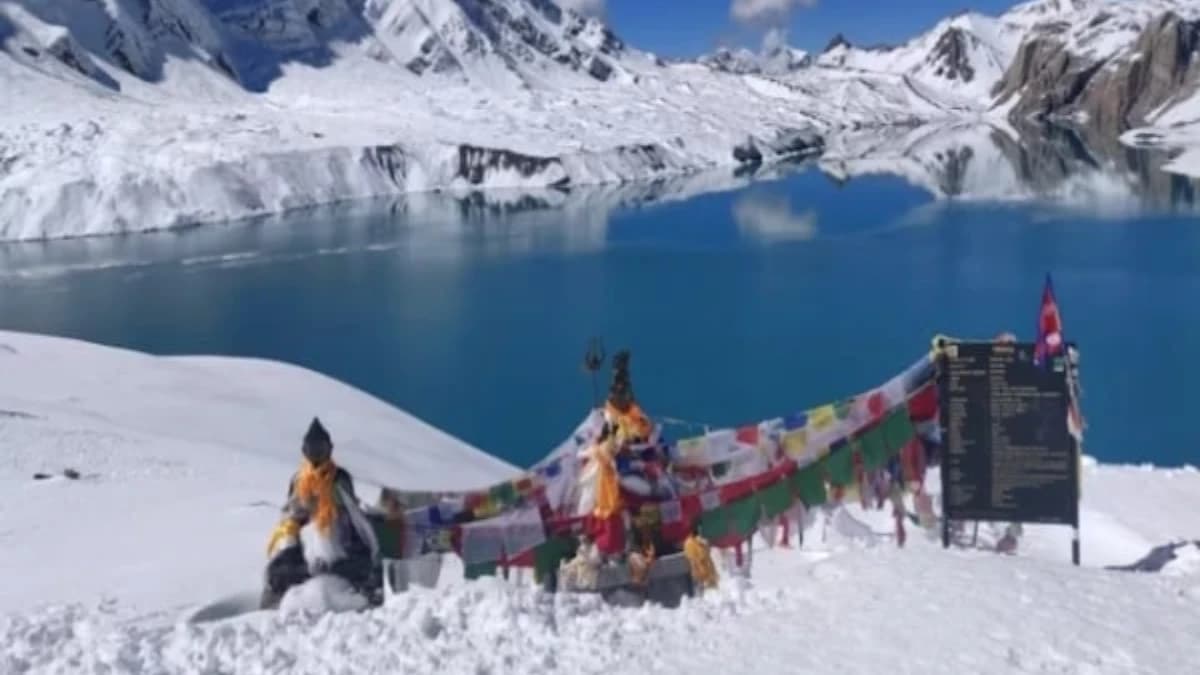
The lake appears without warning. You crest the final moraine ridge above Tilicho Base Camp, lungs working hard in the thin air at 4,919 metres, and there it is: a vast sheet of frozen turquoise wedged between sheer limestone cliffs and the north face of Tilicho Peak. No trees. No sound except wind scraping across ice. At nearly 5,000 metres, Tilicho Lake is one of the highest lakes in the world, and standing on its shore feels like standing at the edge of the earth itself. Two days later, you'll be climbing again, this time toward Thorong La Pass at 5,416 metres (17,769 ft), the highest point of the Annapurna Circuit and one of the great Himalayan crossings. Two high-altitude milestones in a single trek. This trek is the Annapurna Circuit with Tilicho Lake, and it is not for the faint-hearted.
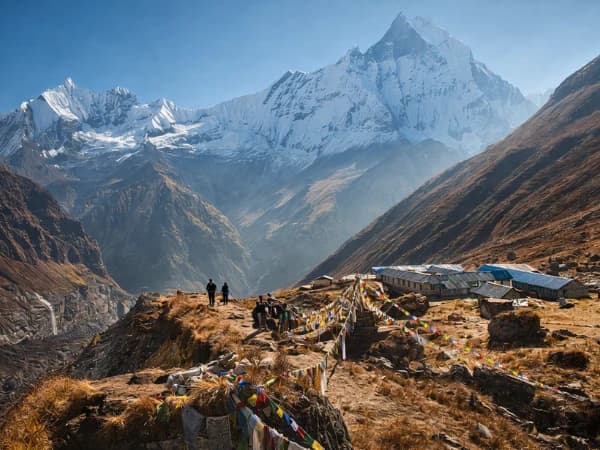
This 16-day itinerary takes the classic Circuit route and adds a detour to Tilicho Lake that most trekkers only dream about. You'll walk from the subtropical lowlands near Chame through pine forests and apple orchards, past ancient Buddhist gompas and Gurung and Magar villages, up into the stark high-altitude desert of Manang, then branch off to Tilicho before rejoining the Circuit for the crossing of Thorong La. On the other side, the sacred temple of Muktinath and the wind-carved Kali Gandaki gorge await, with Jomsom and the apple-brandy village of Marpha marking the final trail days before the drive back to Pokhara. Every night, we spend time in a teahouse, eating dal bhat and local dishes that families have cooked for generations in these lodges. Shreejan Simkhada personally designed the itinerary, and his family has guided people through these mountains for three generations.
What Makes This Trek Special
- Stand on the shore of Tilicho Lake at 4,919 metres (16,138ft), one of the highest lakes in the world, surrounded by 7,000-metre walls of rock and ice that few trekkers ever see up close
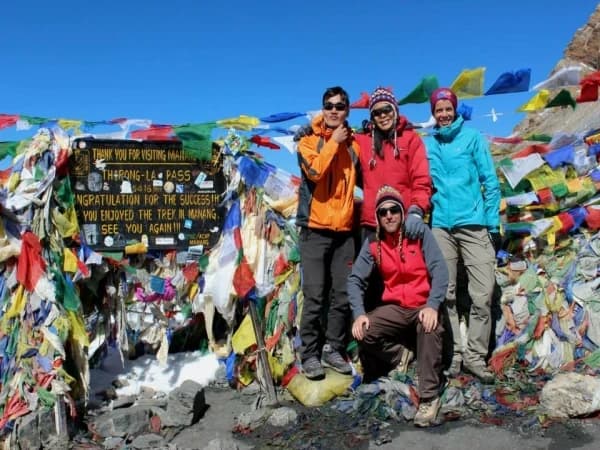
- Cross Thorong La Pass at 5,416 metres (17,769ft), the highest point of the Annapurna Circuit and one of the most celebrated high-altitude crossings on earth
- Experience two major high-altitude milestones in a single trek, something the standard Circuit alone cannot offer
- Walk through the full climate spectrum of Nepal: subtropical forests, terraced rice paddies, pine and rhododendron woodland, alpine meadows, and high-altitude desert above the treeline. The best months are September to November and March to May
- Explore Manang, the ancient trading village at 3,540 metres, where acclimatisation days let you wander past Buddhist monasteries, yak pastures, and ice-lake viewpoints
- Visit the sacred temple of Muktinath (3,710m), a pilgrimage site for both Hindus and Buddhists, with its 108 water spouts and eternal flame burning from natural gas beneath the rock
- Walk through Marpha, the whitewashed apple-brandy village in the Kali Gandaki gorge, and Jomsom, the gateway to Upper Mustang
- Trek through the deepest gorge in the world (Kali Gandaki, between Annapurna and Dhaulagiri), with 8,000-meter peaks rising on both sides. Bring your camera for this stretch
- All permits included (ACAP and TIMS), so you don't spend a day in Kathmandu queuing at government offices
- Small groups of 2 to 20, always with a Nepal government-well-trained guide who knows this trail intimately and monitors your health with a pulse oximeter daily
- Three tiers (Budget, Standard, Luxury) allow you to choose your comfort level. Read about luxury trekking or our budget tips to find your fit
- Every booking supports education for 70 children in rural Nepal through the Nagarjun Learning Center
16-Day Overview
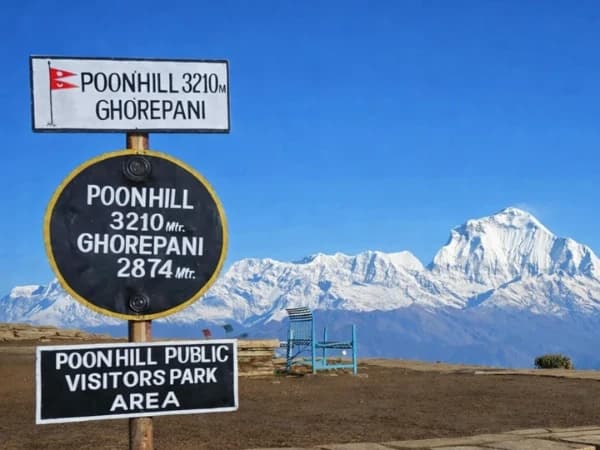
Your journey begins and ends in Kathmandu, but the trek itself starts from Jagat, which is reached by a long drive from Kathmandu via Dumre and Besisahar. From Jagat, the trail climbs steadily through rice terraces and river gorges. The first days follow the Marsyangdi River valley through Chame and into the increasingly dry plains approaching Manang, where you'll spend an acclimatisation day before the Tilicho detour. The trail to Tilicho Lake branches northwest from Manang, climbing through Khangsar and Tilicho Base Camp before the final steep ascent to the lakeshore at 4,919 metres. After returning to Manang, the main Circuit resumes: Yak Kharka, Thorong High Camp, and the pre-dawn crossing of Thorong La at 5,416 metres. The descent to Muktinath takes you into the rain shadow of the Annapurna range, through Jomsom and Marpha, along the Kali Gandaki. After crossing Thorong La and visiting Muktinath, this itinerary continues through Tatopani and its famous hot springs, then climbs to Ghorepani for the classic Poon Hill sunrise before descending to Nayapul and driving back to Pokhara, then Kathmandu.
Before You Arrive
Please arrive in Kathmandu the day before your trek starts. This gives you time to recover from your international flight, meet your guide, and do any last-minute gear shopping in Thamel if needed. We arrange your airport transfer, so you can step off the plane knowing we have sorted everything. Make sure your Nepal visa and trekking insurance are in order before you fly. Your insurance must cover up to 6,000 metres and include helicopter evacuation. This trek reaches 5,416 metres at Thorong La and 4,919 metres at Tilicho Lake.
Online Briefing
After you book, we schedule a video call to walk you through everything: what to wear, what to pack, what the teahouses are really like, how acclimatisation works on this route (especially important given the double high-altitude exposure at Tilicho and Thorong La), and anything else on your mind. This stage is also when you share your hotel preferences in Kathmandu and Pokhara, so we can match the right accommodation to you. No question is too small. We'll also share advice on layering for the altitude range and whether to buy gear in Kathmandu or bring it from home.
Transport
All three tiers travel the same route. Outbound: Kathmandu to Jagat by road on Day 1, a long drive of around 9–10 hours via Dumre and Besisahar. Return: drive from Muktinath via Jomsom to Tatopani on Day 13, then trek through Ghorepani and Poon Hill (Days 14–15), descend to Nayapul and drive to Pokhara on Day 15, then drive from Pokhara to Kathmandu on Day 16. The difference between the tiers is the type of vehicle. Budget trekkers travel by local tourist bus or shared vehicle, which is comfortable, safe, and well-used by Nepalis and travellers alike. Standard trekkers ride in a shared tourist vehicle with more legroom and air conditioning. Luxury trekkers get a premium private vehicle with extra comfort for the long drives. There are no internal flights on this itinerary; everything is by road, which keeps costs down and gives you more of Nepal's countryside. Read our budget trekking tips or our full breakdown of what trekking in Nepal actually costs.
Your Trek, Your Way
Every trek we run is arranged privately for your group. You won't be paired with strangers unless you choose to join a public departure. Whether you book as a solo trekker, a couple, or a group of friends, this itinerary is yours. Want to add an extra acclimatisation day in Manang? Spend longer exploring Muktinath? Should we skip the Tilicho detour and stick to the standard Circuit? We can adjust. Our three tiers (Budget, Standard, and Luxury) give you genuine choice over accommodation, meals, porter support, and transport without affecting the route itself. Same expert guides. Same safety standards. Three comfort levels. Read more about what the price difference actually buys or explore our budget trekking guide.
Difficulty
We rate this trek Very Challenging (5 out of 5). That rating reflects the combination of extreme altitude, long trekking days, remote terrain, and the double high-altitude exposure that sets this itinerary apart from the standard Circuit. You'll reach 4,919 metres at Tilicho Lake and 5,416 metres at Thorong La, both well above the threshold where altitude sickness becomes a serious concern. The Tilicho trail involves exposed sections along steep scree slopes with significant drop-offs, and the Thorong La crossing starts before dawn with a relentless climb through snow and loose rock. Daily walking ranges from 5 to 8 hours over varied terrain, and the overall distance covered across 16 days demands genuine cardiovascular fitness. Our guides carry a pulse oximeter and monitor your oxygen levels daily. We build the itinerary with a steady altitude gain profile and include acclimatisation time in Manang. We also recommend consulting your doctor about Diamox before departure. If you can comfortably walk 6-8 hours a day on hilly terrain and have done some altitude hiking before, you can do this trek. If you have concerns, read our beginner's guide to Nepal trekking.
Compare Our Three Packages
| Feature | Budget | Standard | Luxury |
|---|---|---|---|
| Price from | USD $799 | USD $1499 | USD $2,100 |
| Meals on trek | Not included (order and pay at teahouses) | 3 meals daily + tea/coffee with meals, seasonal fruits, 2L hot water per day | All meals and all drinks (except alcohol), fruits, and dry nuts with every meal |
| Meals in Pokhara | Breakfast only at the hotel | Breakfast only at the hotel | Breakfast only at the hotel |
| Room | Shared teahouse room | Private twin with attached bathroom (where available) | Private deluxe with bed heater and attached bathroom (where available) |
| Porter | Not included | 1 porter per 2 trekkers (max 20kg, 10kg each) | 1 porter per trekker (you carry nothing) |
| Guide | 1 guide per group (assistant at 8+) | 1 guide per 6 trekkers (assistant at 7+) | 1 guide per 2 trekkers, plus an assistant guide for every 2 more |
| Transport | Local bus / shared vehicle | Shared tourist vehicle | Luxury private vehicle |
| Sleeping bag & down jacket | Provided (safety requirement) | Provided (safety requirement) | Provided (safety requirement) |
| Best for | Backpackers and independent travellers | Comfort trekkers, couples, families | Premium experience seekers |
Himalayas for Every Budget. You will receive the same expert guides and the same safety, but with three different comfort levels. Every tier includes all permits (ACAP and TIMS), a well-trained Nepal government guide, airport transfers, a sleeping bag and down jacket, and 24/7 emergency support. The only things that change are the comfort details. Note: in Pokhara, only breakfast is included at your hotel across all tiers; other meals in Pokhara are at your expense and choice, giving you the freedom to explore the city's lakeside restaurants. Meals during the drive between Kathmandu and Pokhara are not included. At high altitudes near Tilicho and Thorong La, accommodation options are limited, and all tiers receive the best available rooms at each stop. Check our guide on WiFi and charging on the trail so you know what to expect above Manang. Explore our luxury trekking guide if you want to understand what premium service looks like at altitude.
The longer the route, the larger the contribution.
Tilicho is the highest lake on the planet at this size, and adding it to the Annapurna Circuit adds four extra trekking days. Those four days also add to what we forward to the Nagarjun Learning Center, the village school in Saldum that my family has been running since 2019. Seventy children attend free of charge and eat two hot meals there each school day. The center is registered with the Nepal authorities and on the UN Partner Portal. A 16-day Tilicho booking puts more into a child’s year than almost any other trek we sell.