Everest Base Camp Trek By Road Trip - 15 Days Itinerary and Cost

8 reviews
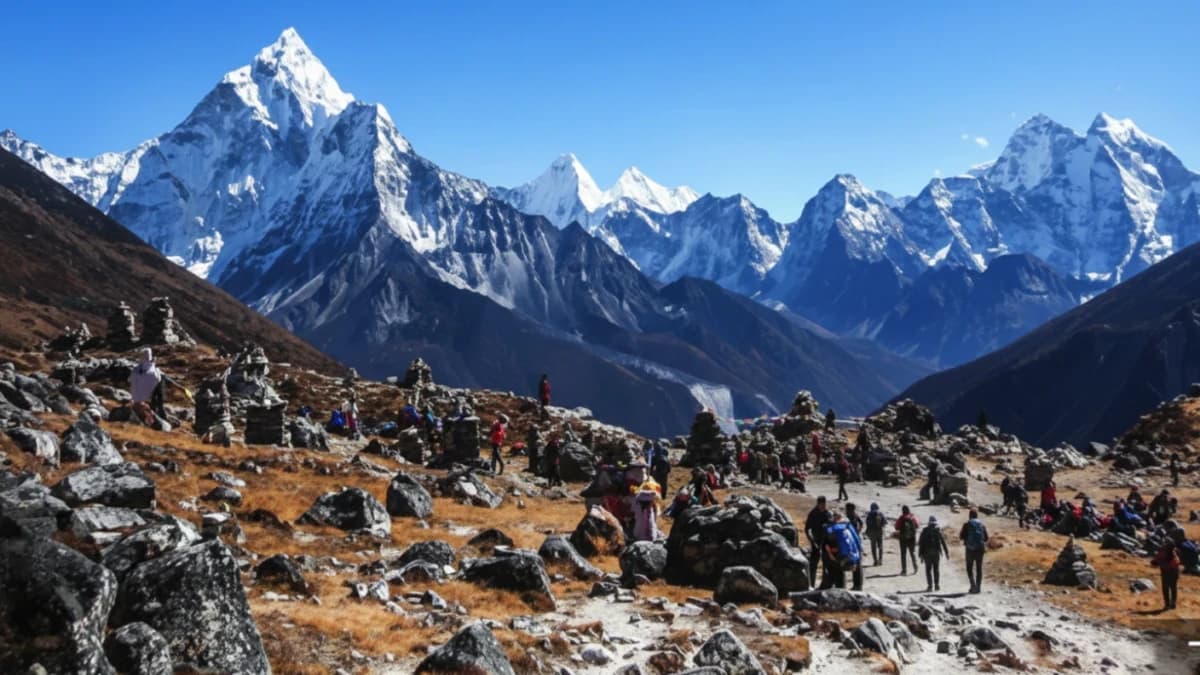
Hiking trail during Everest Base Camp Trek by road trip in Nepal
Quick Overview
Duration15 Days
Trip GradeModerate
CountryNepal
Maximum Altitude5,545m
Group Size2-20
StartsKathmandu
EndsKathmandu
ActivitiesTrekking
Best TimeSpring and Autumn

The road to Everest Base Camp begins long before the mountains. It begins on the winding highway east of Kathmandu, where terraced rice fields give way to pine forests and the air slowly sharpens with altitude. Most trekkers fly to Lukla. You will drive, and that changes everything.

This 15-day journey takes you overland from Kathmandu to Salleri, through some of Nepal's most beautiful and least-visited hill country. By the time you lace up your boots at the trailhead, you will have already watched the landscape transform from subtropical valley to high Himalayan ridge. No white-knuckle Lukla landing. No flight delays that can cost you days of your trek. Just a steady, scenic approach that lets your body adjust naturally.

From Phakding, you join the classic Everest Base Camp route. The trail crosses suspension bridges over the Dudh Koshi River, climbs through Sherpa villages where prayer flags snap in the wind, and passes through teahouses where you will eat dal bhat with people from every corner of the world.

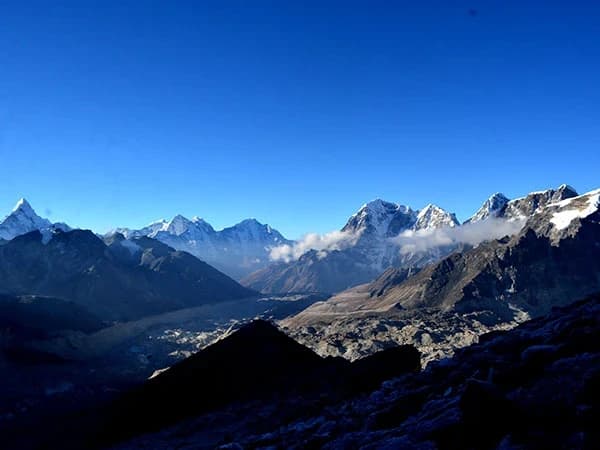
Acclimatisation days at Namche Bazaar and Dingboche are built into every itinerary. These are not wasted days. In Namche, you hike to the Everest View Hotel for your first clear sight of the summit. In Dingboche, you walk above the village to a ridge where Island Peak and Makalu fill the horizon. Your guides have walked this trail hundreds of times. They know when to push, when to rest, and when to stop for tea at a lodge with the best view you will see all week.

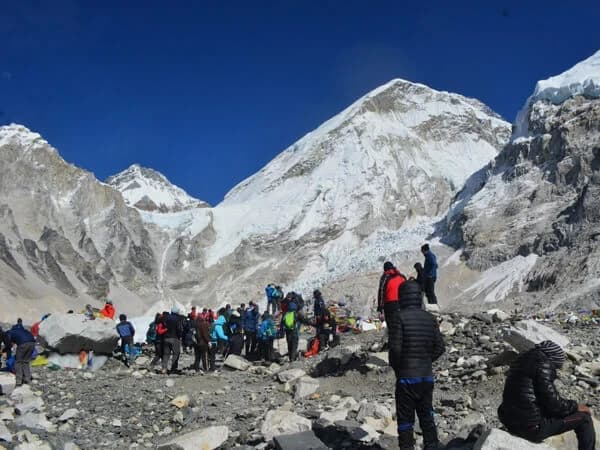
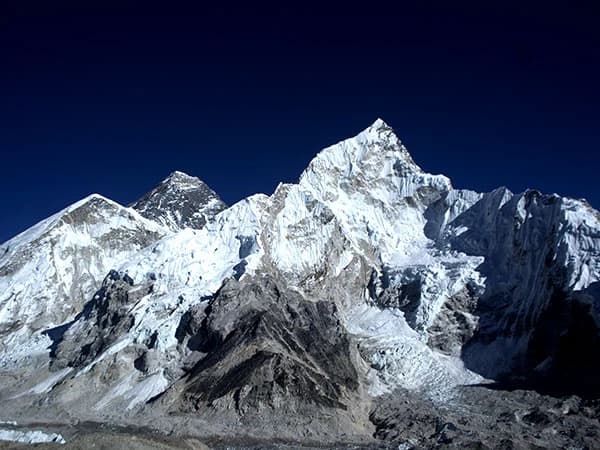
The final push takes you across the Khumbu Glacier to Everest Base Camp at 5,364 metres. The next morning, you climb Kala Patthar (5,545m) before sunrise to watch the first light hit Everest's summit pyramid. Trekkers who have been to both will tell you that Kala Patthar is the moment they came for.

The return follows the same trail south, then a private vehicle carries you back to Kathmandu. Fifteen days, no flights, no cancellations, and roughly $200-300 less than the Lukla route.

What Makes This Trek Unforgettable

  • Skip the Lukla flight entirely. No cancellations, no delays, no Manthali detour.
  • Drive through Nepal's stunning lower hill country before the trek begins.
  • Trek the full classic route: Namche Bazaar, Tengboche Monastery, Dingboche, Lobuche, Gorak Shep.
  • Stand at Kala Patthar (5,545m) at sunrise for the most famous view of Everest.
  • Walk across the Khumbu Glacier to Everest Base Camp (5,364m).
  • Two built-in acclimatisation days for safety and comfort.
  • Visit ancient monasteries at Tengboche and Pangboche.
  • Save $200-300 per person compared to the Lukla flight route.

15-Day Everest Base Camp Road Trek Overview

We begin in Kathmandu, where you board a private vehicle and drive east through the stunning scenery to Salleri and then to the trailhead. This is when the real adventure begins. From Phakding, a two-day hike takes you right to the main Everest trail at Namche Bazaar, the busy trading town that has served as the gateway to Khumbu for centuries.

You proceed to Monjo, the official entry point to Sagarmatha National Park. From there, the trail climbs through magnolia and pine forests until you reach Namche Bazaar. We spend a full day acclimatising here, and again at Dingboche. These breaks are essential for getting accustomed to the higher elevation.

Above Dingboche, the trees disappear and the landscape turns into harsh alpine terrain. The final push is a challenging yet rewarding climb to Gorak Shep, where two great moments converge: the trek to Everest Base Camp (5,364m) and the pre-dawn climb to Kala Patthar (5,545m) for the most famous sunrise in the Himalayas.

We return the same way, passing through Pheriche and Namche Bazaar. Your vehicle will be waiting to drive you back to Kathmandu in comfort. That is the end of your adventure with The Everest Holiday, but most trekkers tell us the memories stay with them for the rest of their lives.

Reminder

For a smooth and easy start, we recommend arriving in Kathmandu by 4 PM the day before departure. This gives you time for a final gear check, a trip briefing with your guide, and to make sure you have everything you need. Read our guide on arriving at Kathmandu airport for what to expect.

Online Briefing

Think of this as our first coffee together before the trip. We will walk you through what to bring, what each day looks like, and answer any questions. After you book, we will send you a couple of times when we can talk. Our trek itinerary does not include your hotel stay in Kathmandu, so during the briefing, please let us know your preferences, budget, and standard of hotel. We will arrange it for you.

Ground Transportation

This is a road trek. There are no flights, no Lukla, no Manthali airport transfers. Your journey to the trailhead and back is entirely by ground vehicle. Budget trekkers travel by local bus or shared jeep. Standard trekkers get a private tourist vehicle. Luxury trekkers ride in a luxury private vehicle. The drive from Kathmandu to Salleri takes 8-9 hours through beautiful hill country.

Note to Trekkers

Experience the Himalayas on your terms. We create personal, intimate treks for groups of two or more. Whether you select our Budget, Standard, or Luxury package, your adventure will be exclusively for you and your companions, for a comfortable and personal journey from start to finish.

Kathmandu Accommodation

Your hotel in Kathmandu is not included in the trek package. During the online briefing before your trek, we will ask about your preferences and budget, whether you want a simple guesthouse or a five-star hotel, and help you arrange it. Your trek package begins when you leave Kathmandu for the mountains.

Compare Our Three Packages

  Budget Standard Luxury
Price from USD 1,133 USD 1,693 USD 2,999
Transport Local bus/shared jeep Private tourist vehicle Luxury private vehicle
Meals Choose your own (approx. USD 15-25/day) 3 meals + tea + fruits + 2L water daily All meals + all drinks anytime (except alcohol)
Room Shared teahouse Private twin w/ bathroom Private deluxe w/ bed heater
Porter Not included 1 per 2 trekkers 1 per trekker (carry nothing)
Guide 1 guide, assistant at 8+ 1 guide per 6, assistant at 6+ 1 guide per 2 trekkers
SIM data SIM only Limited data Unlimited data
Best for Backpackers and independent travellers Comfort trekkers, couples, families Premium experience seekers

Himalayas for Every Budget — same expert guides, same safety, three comfort levels.

Your Trek, Our Family

Shreejan Simkhada comes from three generations of Himalayan expertise. His grandfather arranged expeditions in the 1960s. His father held senior positions at the Nepal Tourism Board and Nepal Mountaineering Association. Shreejan personally designs every itinerary and hand-picks the guide for your group.

Your guide will be one of our Nepal government well-trained professionals, qualified mountaineering experts with years of Himalayan experience. Shreejan briefs every guide personally before your trek begins.

Have a question right now? WhatsApp Shreejan directly: +977 9810351300. No sales team. No chatbot.

Our Credentials

  • 197+ TripAdvisor Reviews, 4.9 out of 5 stars, TripAdvisor Travellers Choice 2024
  • 108+ Google Reviews, 4.9 out of 5 stars
  • TAAN Certified, Member #1586, Government Reg: 147653/072/073
  • Secure 10% Deposit via Himalayan Bank
  • Himalayas for Every Budget, breakfast, lunch, and dinner throughout the trek
  • Three Generations, family guiding in the Himalayas since the 1960s

Solo Trekkers Welcome

You do not need a travel partner to trek in Nepal. Most of the people who book with us come alone, and by day three on the trail, they are sharing meals, swapping stories, and watching sunrises together like old friends.

Our groups are kept small (2-20 people) so you get a personal experience, not a conveyor belt. You also have the option to book privately. If you choose to make it a public group, we will list your dates as fixed departures so other solo travellers can join you. Either way, the trek is built around you.

Difficulty: Moderate to Challenging (4/5)

You need to be comfortable walking 5-8 hours per day over uneven terrain. The road section adds scenic value but also longer travel days. Two acclimatisation days are built in at Namche Bazaar and Dingboche. Read our beginner's guide to Nepal trekking if this is your first Himalayan trek.

Difficulty

This trek is rated Moderate to Challenging. You walk 5-7 hours per day over well-maintained trails, with two rest days built in for acclimatisation. The highest point is Kala Patthar at 5,545metres. No technical climbing is required, but you should be comfortable with steep ascents and descents at altitude. The road approach from Kathmandu adds a day of driving but actually makes the trek easier on your body — you gain altitude gradually instead of flying straight to 2,860 metres at Lukla.

If you can walk 6-8 hours on uneven terrain and handle basic fitness activities like stair climbing and hiking, you are ready for this trek. Read our detailed guide on how hard EBC trek really is and how to train for it.

Trek With a Purpose — Changing the World, One Step at a Time

A portion of every booking supports the Nagarjun Learning Center, founded by our family in 2019. Today, 70 children receive free education and hot meals daily at our flagship centre in Saldum Village, Dhading District. We have also provided free medical care to 600+ people and reached 275+ women through support programmes. The centre is verified and listed on the UN Partner Portal. When you trek with us, you are not just climbing mountains, you are building futures. Trek With a Purpose — Changing the World, One Step at a Time.

Itinerary

Day 01: Early morning drive from Kathmandu to Salleri/Phaplu (2,413m/ 7,915ft.), usually taking around 8 to 9 hours with an elevation change of 819m – 3571ft.
Max Altitude: 2,413m/ 7,915ft.
Day 02: Early morning, taking a local jeep 5 to 6 hours drive to Thamdanda (2,300m/ 7,546ft.), after that trek to Paiya (2,730m/ 8,956ft.), usually around 1 hour with a total elevation change 400m – 1410ft.
Max Altitude: 2,730m/ 8,956ft.
Day 03: After Breakfast, the trek begins from Paiya to Phakding (2,610m/ 8,562ft.), usually around 5-6 hours with a total elevation change of 120 m – 394 ft.
Max Altitude: 2,610 m/ 8,562ft.
Day 04: After crossing from Phakding to Namche Bazaar (3,440m/ 11,285ft.), usually around 5-6 hours with a total elevation change of 830 m – 2724 ft.
Max Altitude: 3,440m/ 11,285ft.
Day 05: Acclimatisation Day Namche Bazaar
Max Altitude: 3,440 m/ 11,285ft.
Day 06: Trek from Namche Bazaar to Tengboche (3,855m/ 12,850ft.), usually around 5-6 hours with a total elevation change of 415 m – 1375 ft.
Max Altitude: 3,855m/ 12,850ft.
Day 07: Trek 11 km/ 6.8 miles walk from Tengboche to Dingboche (4,410m/ 14,290ft.), usually around 5-6 hours with a total elevation change of 505 m – 1440ft.
Max Altitude: 4,410m/ 14,290ft.
Day 08: Acclimatisation at Dingboche.
Max Altitude: 4,410m/ 14,290ft.
Day 09: Trek from Dingboche to Lobuche (4,910m/ 16,175ft.), usually around 5 hours with a total elevation change of 570 m – 1885ft.
Max Altitude: 4,910m/ 16,175ft.
Day 10: Early morning trek start to Gorak Shep (5,185m/ 17,010ft.) and visit Everest Base Camp (5,364m/ 17,594ft), usually around 5-6 hours with a total elevation change of 179 m – 584 ft.
Max Altitude: 5,185m/ 17,010ft.
Day 11: After breakfast, the hike starts to Kala Patthar (5545m/ 18192ft.) then Trek to Pheriche (4,280m/ 14,042ft.), usually around 7-8 hours with a total elevation change of 1265 m – 4150 ft.
Max Altitude: 4,280m/ 14,042ft.
Day 12: Trek from Pheriche to Namche Bazaar (3,440m/ 11,286ft.), usually around 8-9 hours with a total elevation change of 840 m – 2756 ft.
Max Altitude: 3,440m/ 11,286ft.
Day 13: Trek from Namche Bazaar to Chheplung (2,660m/ 8,727ft.), usually around 1-2 hours with a total elevation change of 780 m – 2559 ft.
Max Altitude: 2,660m/ 8,727ft.
Day 14: Trek starts to Surke/Thamdanda with end and drives to Phaplu (2,413m/ 7,915ft.), usually around 5-6 hours.
Max Altitude: 2,413m/ 7,915ft.
Day 15: Drive to Kathmandu is the last day of the trek, usually around 10 – 12 hours(1,400m/ 4,593ft.)
Max Altitude: 1,400m/ 4,593ft.
Expand All
Couldn't find what you're after?Reach out to our travel experts.
Customise Trip

Interactive Route Map

Altitude Chart

Everest Base Camp Trek By Road Trip - 15 Days Itinerary and Cost

Availability

Book your own private small group trip
No. of travellers
Price per person
1 - 4 pax
US$1133
5 - 8 pax
US$1050
9 - 12 pax
US$1029
13 - 20 pax
US$902

Discounts are determined exclusively by the size of your group. We do not add additional members to your group.

Book Now
hbl logo
Secure Payment by Himalayan Bank.
Cost Includes

Transportation

  • Airport Pick-up and Drop-off from Tribhuvan International Airport to the Hotel of your choice.
  • Round-trip Local ground transportation to Salleri/Phaplu and back to Kathmandu.

Accommodation and food

  • During the trek, Food or drinks are not included. 
  • You will stay in a local teahouse and lodge in a shared room during the duration of the trek.

Guide and porter

  • An English-speaking, Nepal government well-trained guide is provided (one guide for your group). For groups of 8 or more trekkers, an additional assistant guide is included. For more than 8 trekkers, 1 assistant guide is added.
  • Porter is not included, only the guide.

Permits and Expenses

  • Sagarmatha National Park Permits.
  • Khumbu Pasang Lhamu Rural Municipality fees.
  • Trekkers Information Management System (TIMS) card fee.
  • All government taxes and official expenses.

Medical Assistance

  • First aid kits are provided, including an oximeter to check blood oxygen levels at high altitudes.
  • Arranging rescue operations in case of an emergency health condition (funded by the trekker's travel insurance)

Complimentary

  • Company's T-shirt and Cap before the trek.
  • At the end of your trip, you'll have a farewell meal at a restaurant in the area. At the farewell dinner after the Everest Base Camp Trek By Road Trip - 15 Days, we will give you a certificate of achievement for successful completion of the trek. 

Benefits

  • Sleeping bags and down jackets: if you do not have your own, please inform us either at your online briefing or after the arrival briefing in Kathmandu before your trek so we can provide you with one for your use during the trek.
  • Free Excess luggage storage at The Everest Holiday store for the duration of the trek.
  • We will arrange a SIM Card for every individual trekker upon arrival in Kathmandu and teach them how to get budget internet packages and top up their services.
Cost Excludes

International Flight

  • International flight cost.

Nepali Visa

  • At Tribhuvan International Airport, you can pay the following fees upon arrival: $30 for a 15-day visa, $50 for a 30-day visa, and $120 for a 90-day visa. Alternatively, you can apply for and receive a Nepal visa from the Nepalese embassy or consulate in your country.

(Note: Anyone having a visa before arrival has an express exit through the immigration line. To obtain a visa upon arrival at TIA Kathmandu, you must have the necessary funds in US dollars.)

Accommodation

  • Accommodation in Kathmandu before and after the trek will not be included in this package. So, please let us know your preferences, budget, and standard of the hotel you would like to stay in Kathmandu during the online meeting. So we can arrange it for you accordingly.

Guide and Porter

  • Tip for guides and porters. (Recommended)

Other expenses

  • Excess luggage charges for an extra porter to carry extra luggage and also any extra cost charged by the airline for extra luggage. (A porter carries 20 kg in standard package with 10 kg per person, as he carries for two people but in luxury package you are provide with a porter each for a 20 kg weight limit, and for budget package no porter is provided, only a guide who cannot carry loads for you.)
  • All non-alcoholic drinks like bottled water, hot water, soft drinks, juice, tea, coffee and alcoholic drinks are not included, etc.
  • Additional costs due to delays caused by circumstances out of our control, like landslides, unfavourable weather, itinerary modification due to safety concerns, illness, changes in government policies, strikes, etc.

Equipment Lists

We suggest you carry only the clothing and equipment that are required for the trek. You can store your excess luggage at The Everest Holiday office for free.

Budget package: No porter is provided. You carry your own backpack throughout the trek. Pack light.
Standard package: One porter is shared between two trekkers, carrying a maximum of 20 kg (10 kg per person). Share one large duffel bag (over 60 litres) with your trekking partner. You carry a small daypack with water, camera, and snacks.
Luxury package: Each trekker has their own personal porter carrying up to 20 kg. You carry nothing except a light daypack. Your guide will assist with your day bag.

  • Sun hat (wide-brimmed)
  • Beanie (for warmth)
  • A neck gaiter or buff (for warmth and sun protection)
  • Sunglasses with UV protection
  • Insulated gloves or mittens (for cold weather)
  • Waterproof gloves (for wet conditions)
  • A thick-wool or synthetic pair of moisture-wicking socks
  • waterproof hiking boots with ankle support and excellent traction
  • Sandals (for camp use or river crossings)
  • Gaiters protect from mud, water, and debris.
  • Moisture-wicking t-shirts (short and long sleeves)
  • Thermal base layer (for colder conditions)
  • Fleece jacket and down jacket (Mandatory)
  • Lightweight puffy jacket (for extra warmth)
  • Waterproof and windproof jacket (Gore-Tex or similar)
  • Raincoat
  • Lightweight, breathable long-sleeve shirt
  • Polypropylene underwear (four)
  • Quick-drying pants/trousers (convertible or full-length)
  • Insulated pants (for colder conditions)
  • Lightweight cotton pants
  • Wear long underwear or thermal leggings when it is cold.
  • Two pairs of thermal/trekking trousers (pants)
  • Biodegradable bar soap
  • Toothbrush and toothpaste
  • Medium-sized drying towel
  • Wet wipes or hand sanitizers
  • The toilet paper is stored in a Ziplock bag.
  • Feminine hygiene products
  • Travel-sized shampoo
  • Nail clippers
  • Small mirror
  • A duffel bag with a capacity of over 60 litres is intended for porters, with one duffel bag for every trekker.
  • An individual's daypack or backpack with a 20- or 30-litre capacity should be plenty.
  • Adjustable and lightweight poles (preferably collapsible)
  • A two-litre water bladder or bottle (with a protective cover for cold climates)
  • Use water purification methods such as purification tablets, filter bottles, or UV filters.
  • Camera/smartphone (extra memory cards and batteries)
  • A portable charger, spare batteries, or a battery pack
  • Two-pin charging plug
  •  
  • Personal medications (inhalers, allergy meds, etc.)
  • Few passport-size photos
  • Passport photocopies
  • Notebook and pen
  • Binoculars
  • Water purification (tablets, filter bottle, UV filter)
  • Energy bar
  • Basic first aid kit (band-aids, antiseptic wipes, pain relievers, etc.)
  • Diamox (for altitude sickness prevention/relief)
  • Personal medications (inhalers, allergy meds, etc.)
  • Lightweight headlamp (with adjustable brightness)
  • Face wipes
  • An extra pair of batteries

Essential Information

The Challenge: Height and Difficulty Level?

It will be a difficult but not impossible trek, so keep an optimistic attitude. The hike is classified as medium challenging, so you don't need to be an experienced mountaineer, but you do need to be in decent physical condition. Starting the journey with a jeep ride through the stunning lower Khumbu valley is a great way to get acclimated to it and extends the duration by two or three days. The path winds through dense forests and across rugged, undulating hills for the first three to four days.

You will ascend into a more rugged region with deep gorges and the stony moraine that surrounds glaciers in the second stage. The sections that are difficult and take a long time to climb are the hardest. The paths require some effort, but they are not difficult. About six hours a day of walking on steep, frequently challenging paths will be more than enough.

In "Keeping Your Cool at High Altitudes," every hiker must confront the hidden dangers associated with high altitudes. The journey starts at 1,350 metres in Kathmandu and finishes at the highest peak, Kala Patthar, at 5,545metres.

Accommodation 

Along the way, you'll spend 14-nights in conventional teahouses or lodges on the 15-day trek. The hotel and some of the lodges along the way have amenities like power for charging devices, Wi-Fi, and hot showers. However, you might have to pay for it. You will need at least two additional nights in Kathmandu, which our package does not cover, but as stated above, we can arrange one for you as per your choices and budget.

Food during the EBC Trek by Jeep 15 days 

You will be pleasantly surprised by the range of cuisines on offer! You will also get breakfast, lunch, and dinner with your journey package. There is a wide range of Nepali and Western foods to choose from. Common Options: Eggs, bread, and oatmeal make up breakfast. For lunch and dinner, you can have Dal Bhat, a healthy Nepali dish, as well as momos, spaghetti, pizza, and noodle soups.

Luggage 

We provide one porter for every two trekkers. Each trekker’s luggage limit is 10 kg, so a porter will carry no more than 20 kg in total. We never overload our porters. You will still need to carry a small backpack for your valuables. We recommend bringing only essentials. Extra baggage can be stored for free at your hotel or with us. All luggage and gear will be checked before the trek begins.

Typical day 

Each day starts with an early breakfast to fuel up for the trek. The day starts with a hot cup of tea/coffee and is usually divided into two parts: a 3–4-hour morning walk, followed by a one-hour lunch break, and a shorter afternoon trek to reach the day’s destination. Along the way, you can enjoy stunning mountain views, take photos, and observe local villages and wildlife. Dinner is served around 7:00 PM, after which your guide will share the plan for the next day. Evenings are free for relaxing, exploring the village, socializing with fellow trekkers, or enjoying some quiet time.

Facilities and Essentials 

Water 

You can buy a water bottle from shops along the trail or get boiled/filtered water at lodges. It is advised to bring a refillable water bottle and fill it up with boiled water. Avoid drinking untreated tap, well, or river water. For safety, please use water purifying tablets, or you can buy in the shops along the trail.

Communication

Your safety is the most crucial thing. Every day, our trip leaders talk to our main office on their cell phones. We will provide you with a local SIM card in Kathmandu to use on your phone and also teach you how to take a data package and use mobile data, but keep in mind that cell phone connections are weaker and less reliable as you move higher up. Don't worry; our crew is always ready for everything that comes up.

Travel Essentials

Visa 

Foreigners require a visa to enter Nepal, but Indians don't. Most people can get a visa when they arrive at Kathmandu International Airport. The current fee is USD 50 for 30 days, payable in cash. Citizens of China and SAARC countries receive a free visa. Also, we recommend you to inform your country embassy or consulate of your visit to Nepal and your travel partner here. 

Travel insurance 

Having comprehensive travel insurance is mandatory for this trek. Your policy must cover medical expenses and emergency helicopter rescue up to an altitude of 5500 metres. Before the trek begins, you will need to provide us with a copy of your insurance policy.

Currency Exchange

The Nepali Rupee (NPR) is the country's official currency; one US dollar is equivalent to around 130 NPR. In Kathmandu, you may find banks and approved money exchange centres where you can exchange major foreign currencies. ATMs are widely available to withdraw NPR, but extra service fees may apply. Make sure your notes are new and undamaged, as old or torn bills may be refused. Only the 100 INR note from India is legally accepted in Nepal. It’s best to exchange money in Kathmandu before heading to trekking regions, as exchange options in remote areas are limited.

Extra Expense

While our package covers most of your expenses during the trek, you will need to budget for some personal items like meals and accommodation in Kathmandu, visa fees, snacks, hot showers, personal equipment, tips for the crew, etc. we recommend you budget approximately $20 USD per day for these personal expenses during the trek.

Trek booking

Personal trek 

We can only provide a personal trek, so you will only be trekking with your  group. We will never add strangers to your treks. All the treks are customizable per your schedule.

Individual-group bookings

Our treks are organised with a minimum of 2 people so,If anyone is alone and does not have a friend or family joining them, we can organise a group trek open for all. If you prefer to join a group, we can also help you connect with other trekkers. Once you confirm, your group trek will be posted on our website, so others can join too. This is our policy to make every trek into your own personal holiday in the Himalaya. 

Trust trek booking 

The Everest Holiday is a registered and bonded trekking operator, ensuring a secure booking process. We are proudly members of the Trekking Agency Association of Nepal (TAAN) and the Nepal Mountaineering Association (NMA). Our Founder, Mr. Ganesh Simkhada, has held senior positions in Nepal's tourism and mountaineering institutions, including the Nepal Tourism Board and Nepal Mountaineering Association. To confirm your booking, we require a 10% advance payment. Payment options include the Himalayan Bank online portal (on our website), major credit cards, bank transfers, Wise, and Western Union. After you arrive in Kathmandu, you can pay the remaining balance.  Please send us your important travel documents, such as a passport copy, within one week of booking. Please make sure your passport has a minimum of 6 months of validity remaining at your arrival date in Nepal.

Last-minute booking

We recommend booking your trek in advance. However, we also offer a last-minute booking option, which requires full payment 24 hours before departure. For the last-minute booking, please contact shreejan at +977-9810351300 or email us at info@theeverestholiday.com Please note that last-minute treks may face delays due to circumstances beyond our control. 

TEH family

We are a family firm that has been in the tourism business in Nepal for three generations. We believe that all of our employees and teams are like family because we started as porters and now run an agency. Our professional and experienced guides and Sherpas will be with you the whole time to make sure your trek is safe and memorable. They know how to do first aid in the bush and rock climbing and how to stay safe in the mountains. They also speak good English. They are from the upper Himalayas, so they know the area well. We take care of their insurance, food, housing, and medical needs when they need them. Please treat our workers like family, and don't hesitate to ask for help or have questions at any time.

Flexible Schedule 

Our trip schedule is determined by your travel date, and you can make any changes to it. If our scheduled trek dates don't work for you, please let us know, and we will be happy to arrange a trip according to your time and schedule.

Trip Extension 

You can easily extend your stay with other adventures. We can arrange exciting activities for you, such as a jungle safari (Chitwan and Bardiya),Bhote koshi, Kushma), Bungee jumping (Pokhara, Bhote Koshi, Kushma), Rafting (Bhote koshi, Trishuli, and Seti rivers) and kayaking (Trishuli and Pokhara), paragliding (Pokhara and Kathmandu), zip flying (Kathmandu, Pokhara and Kushma) Canyoning(Pokhara and Sukhuta Beach), Hot ballon (Pokhara), according to your interest. We can also set up sightseeing tours around the Kathmandu Valley if you're interested in culture and history.

These tours will take you to UNESCO World Heritage sites like Bhaktapur Durbar Square, Patan Durbar Square, Kathmandu Durbar Square, Swayambhunath (Monkey Temple), Boudhanath Stupa, Changunarayan, and Pashupatinath Temple. We suggest a trip to Nagarkot and Dhulikhel, a hill station just outside of Kathmandu, around sunrise for a serene getaway. We can also set up spiritual trips for Buddhists and Hindus that take you to temples, stupas, monasteries, and meditation centres. When you're booking a trip, please have a look at our ADD-ON package for an amazing adventure during the trek.

Ecotourism practices 

We request that you join our eco-friendly trekking practice as part of our strong commitment to protecting the fragile beauty of the Everest region. Every guest will get their own eco-waste bag at the beginning of our trip. Please use this bag to collect all of your personal trash that can't be composted, like snack wrappers, plastic bottles, and batteries. Please don't leave anything on the trail. Instead, carry this bag with you as we go down, and our guides will show you where to find the public trash cans and recycling bins where you can properly dispose of it. We need your help to keep the Himalayas clean and beautiful for future generations.

Trip conclusion 

Farewell Dinner 

We will celebrate your successful trek with a goodbye supper in Kathmandu after the trek. This is a great opportunity to share stories from your adventure and provide us with your feedback. We will also present you with a certificate of achievement to recognise your incredible accomplishment.

Departure

To arrange your airport transfer, please let us know your hotel name, room number, and flight departure details. We will take you from your hotel to Tribhuvan International Airport so you may catch your trip home. We sincerely hope you had an amazing journey and hope to see you again soon for another trip in Nepal.

Tipping

Tipping is a common practice in Nepal. We recommend giving a group tip to your guide and porters at the end of the trek. The amount is up to you and can depend on the quality of service, trip length, your budget, and the overall cost of the trek.

Feedback 

After finishing your trek, The Everest Holiday will arrange a farewell dinner in Kathmandu. During the dinner, you will receive your trek achievement certificate and can also share your feedback about the trek.

FAQs

Q1: What is an "Everest Base Camp Road Trip" exactly?
 It's a different way to go to Lukla than flying.  You don't fly; instead, you drive a long way from Kathmandu to a roadhead like Salleri, Phaplu, or Jiri to start your trip.  You start hiking from there.  This is a mix of the classic Everest Base Camp hike and the thrill of a rough road trip over the Himalayas.

 Q2: Why would I pick this instead of flying to Lukla?

  •  Getting used to the altitude: The slower, gradual climb by road and foot greatly lowers the chance of getting sick from the altitude.
  •  Authenticity: You see a more real, less touristy side of Nepal as you walk through traditional communities and landscapes that most trekkers overlook.
  • Adventure: It's a more daring journey that takes on the challenge of the road less traveled.
  •  No Flight Worries: You don't have to worry about the many delays and cancellations that happen to Lukla flights because of the weather.
  •  You walk the same path that Hillary, Tenzing, and the first expeditions took.

 Q3: When does the road trip start and end?

Kathmandu is where it starts.

  •  route to Salleri/Phaplu (shorter route, more usual presently) or Jiri (longer drive, the classic "Gateway to Everest").
  •  Trek From: The roadhead (like Salleri) to Everest Base Camp and return.
  •  Return: You can either hike all the way back to the roadhead or fly out from Lukla for a one-way trip.

 Q4: How are the roads?

  • The roads are rocky, narrow, winding, and generally not paved. They are mountain tracks.  They are bumpy, dusty, and can change with the weather.  You must have a strong 4x4 Jeep or anything like it.  The drive is an adventure all by itself!

 Q5: How long does it take to drive?

  •  From Kathmandu to Jiri: 8–10 hours (around 200 km)
  •  Kathmandu to Salleri/Phaplu: 8 to 9 hours (around 250 miles)
  •  Kathmandu to Thamdanda: 5–6 hours (a new way to get there)

 Q6: How long is the whole trip?

  •  A road-based EBC trek takes longer than a regular trek.
  •  Classic Jiri to EBC Return (Full Circuit): 19–21 days
  •  Lukla Fly-Back from Salleri/Phaplu to EBC: 16–18 days
  •  The standard fly-in/fly-out expedition lasts 12 to 14 days.

 Q7: What kind of car do I need?

 You need to rent a private 4x4 Jeep with a driver who understands the Himalayan routes well.  These routes are not good for regular automobiles or buses.

 Q8: What should I bring with me on the drive?

  • The roads are really twisty, so take motion sickness medicine.
  • Dust Mask or Scarf: The roads can be exceedingly dusty.
  • Snacks and water: There aren't many stops.
  • Patience: It's typical for things to take longer because of the weather, landslides, or animals.  Accept it as part of the journey.

 Q9: Does this choice cost more?

 It can be a cheaper option than a flight to Lukla, but it depends.  The driving itself might be cheaper than a flight, but the lengthier trip means more days of food, lodging, and possibly guide and porter charges.  You have to choose between time and money.

 Q10: Is it safe?
 With a skilled driver, the roads are exciting but mostly safe.  Because of the superior acclimatisation profile, the risk of altitude sickness is really higher.  Always use a trustworthy travel service that can give you a safe car and driver.

 Q11: Can I accomplish this on my own?
 Yes, but it's hard to do because of the logistics.  To set up a trustworthy private jeep, know exactly where the roadheads are, and arrange the hiking stages, you need to do a lot of research.  Most people who go trekking find it easier to book through a trekking service that takes care of all the transportation details.

 Q12: What are the most important things to see along this route?

  • Cultural Depth: Learning about the Rai, Jirel, and Sherpa civilizations in the Solu-Khumbu area.
  • Lamjura La Pass: 3,530 meters. The Jiri route is a hard but rewarding high pass.
  • Less Traffic: The trails are quieter until you get to the major path around Namche Bazaar.
  • Better acclimatisation: Your body will appreciate you for taking it slowly.
  • The Feeling of Accomplishment: It feels great to finish the whole historic path.

Instead of flying to Lukla, you drive from Kathmandu to Phaplu or Salleri on a scenic mountain road, then trek to Everest Base Camp from there. The road trip approach adds a few days to the itinerary but removes the Lukla flight entirely. This means no flight cancellations, no waiting for weather, and a gradual approach through Solukhumbu villages that most trekkers never see. It is how the original Everest expeditions reached base camp before Lukla airport existed.

Three main reasons. First, Lukla flights are frequently delayed or cancelled by bad weather, and you could lose days waiting at the airport. The road trip eliminates this risk. Second, the drive passes through beautiful countryside and lower Sherpa villages that the standard EBC trek misses entirely. Third, the gradual altitude gain from a lower starting point gives better acclimatisation, which reduces the risk of altitude sickness higher up.

The drive to Phaplu takes approximately 10 to 12 hours on mountain roads, broken into two comfortable days with an overnight stop. The road is paved for most of the distance but becomes rougher for the final section. Our drivers know this route well and use sturdy 4WD vehicles. Despite the length of the drive, the scenery keeps it interesting, with terraced hillsides, river valleys, and views of distant snow peaks.

Yes, and it may actually be the better option if altitude concerns you. Starting from Phaplu (2,470m) rather than Lukla (2,860m) means you begin lower and gain altitude more gradually over additional days. This natural acclimatisation profile significantly reduces the chance of altitude problems. Your guide monitors your health daily and can adjust the pace if needed.

During the drive, you stay in comfortable local hotels in towns along the highway. Once the trek begins from Phaplu, you stay in teahouses similar to the standard EBC trek route. The teahouses in the lower Solukhumbu region are generally quieter and less crowded than those on the main Lukla route, which many trekkers appreciate. As you join the main trail near Namche Bazaar, the accommodation is the same as the classic route.

The trekking difficulty is similar to the standard EBC trek once you join the main trail. The additional days from Phaplu add some extra walking but at lower altitude and through gentler terrain. The daily walking distances average 5 to 7 hours with moderate elevation gain. The hardest sections remain the same as the classic route: the climb to Namche Bazaar and the push from Gorak Shep to Base Camp. Previous trekking experience is helpful but not essential.

You need the same permits as the standard EBC trek: a Sagarmatha National Park entry permit and a Khumbu Rural Municipality entry permit. Our team arranges both permits in Kathmandu before departure. No additional permits are required for the road section. Your TIMS card covers the trekking portion.

Yes, and many trekkers choose to do exactly this for a fully flight-free experience. The return drive follows the same route in reverse. Alternatively, you can trek back to Phaplu and drive from there, or continue trekking south through the Solukhumbu valleys for an extended return that visits additional villages. We can customise the return to match your schedule and interests.

Autumn (October to November) and spring (March to May) are ideal, just like the standard EBC trek. The road is passable year-round but can be muddy during the monsoon (June to September). Winter treks (December to February) are possible with fewer crowds but colder temperatures and occasional snowfall on higher sections. The road trip option works particularly well in spring when Lukla flights face the most weather delays.

The road trip version costs roughly the same as the standard trek. You save the cost of the Lukla return flights (approximately $350 to $400 per person), but the extra days of trekking, accommodation, and vehicle hire balance this out. The real value is peace of mind: no risk of flight delays eating into your holiday, and a richer cultural experience through the lower Sherpa villages.

The drive and initial trek days pass through the heartland of the Solukhumbu district. You visit Sherpa villages like Junbesi and Salleri that were on Hillary and Tenzing's original 1953 approach route. The lower forests are rich with rhododendron, magnolia, and birdlife. You also see the Phaplu monastery and local markets that have changed little in decades. These sections give a sense of the Khumbu that existed before Lukla airport transformed the region.