Trek Highlights
- 7-day private trek to the Everest View Hotel (3,880m), the highest point on this route. Same Khumbu villages as the EBC trek, but the maximum altitude is below the AMS danger zone for healthy walkers.
- Walk through Phakding, Namche Bazaar, and the same trails the EBC trek uses, with the same Sherpa villages and the same Khumbu views. The big difference: no glaciers, no high pass, no above-4,000m sleeping.
- Designed for first-time Himalayan walkers, families with kids, and trekkers who want the Khumbu cultural experience without the altitude challenge of the EBC route.
- Private guide and porter ratio that does not change based on group size. No shared-group surcharge gimmicks.
- 10% deposit to lock dates, balance paid in person in Kathmandu. No full prepayment required to a foreign trekker you have never met.
- Every booking helps fund our Nagarjun Learning Center work at Saldum, where 70 children are taught by one dedicated teacher.
Why I built this trek the way I did
I am Shreejan, the founder of The Everest Holiday. The Everest View Trek is the version of EBC I send people on when they want the Khumbu experience without the altitude commitment. The highest sleeping point is Namche at 3,440m and the highest day hike point is the Everest View Hotel at 3,880m. Both are well below where AMS becomes serious for healthy walkers. That makes this trek accessible to families with children, fit older walkers, and people for whom the standard 12-day EBC schedule is more risk than they want to take on their first Himalayan trip.
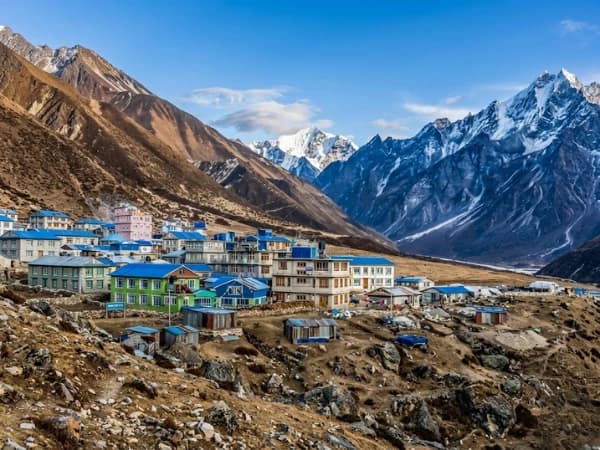
The route through Phakding, Namche, Khumjung, and the Everest View Hotel passes through the same Sherpa villages as the standard EBC trek. You see the same monasteries, drink the same yak butter tea, sleep at the same teahouses. What you do not do is push beyond Tengboche to the high-altitude corridor where AMS appears. That is the trade-off: same culture, easier altitude profile.
We run this as a private trek only. No shared-group commitment. Your pace, your rest days, your conversations at dinner. We do not change the guide-to-porter ratio when the group is smaller. Your guide and porter are with you whether you are two people or six.
Every booking on this trip helps us pay the teacher’s salary at our Nagarjun Learning Center in Saldum, where 70 children get free education. The salary is currently funded out of my own pocket. Your trek is what makes that sustainable.
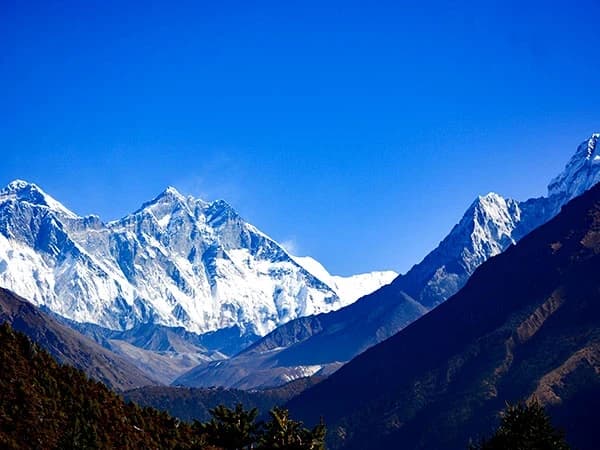
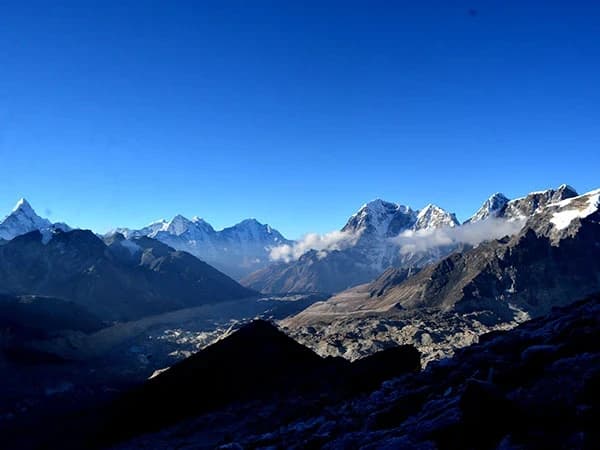
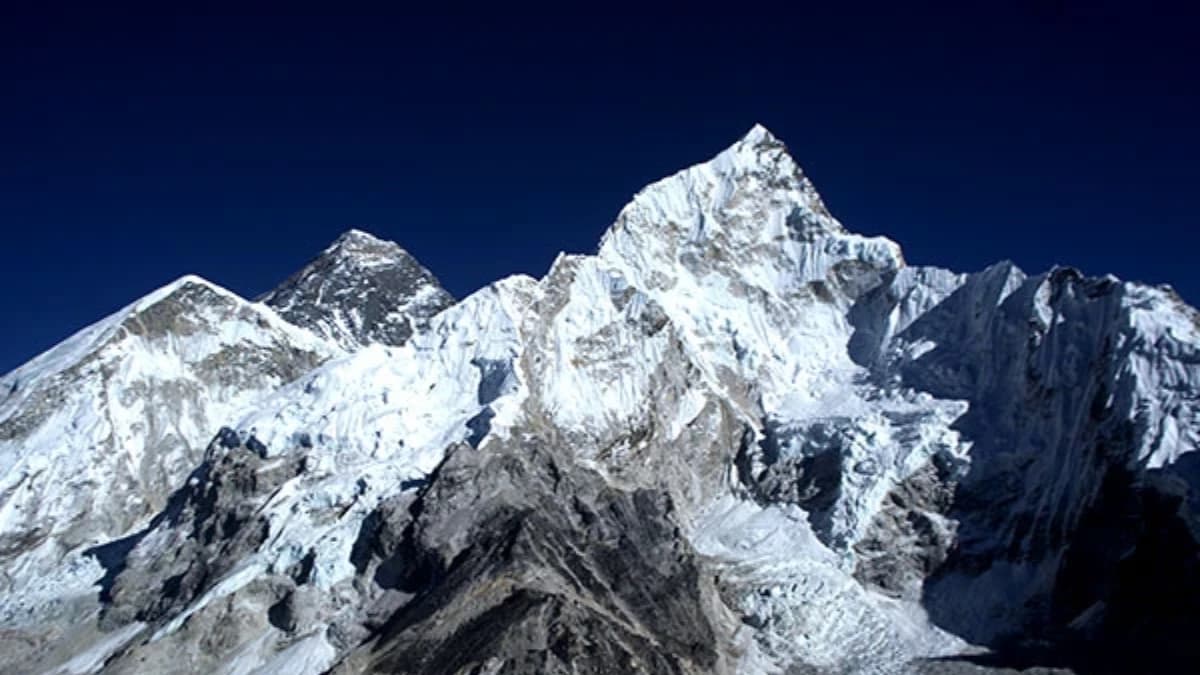
The morning mist lifts from the valley floor, and there it is: Everest, Lhotse, Ama Dablam, the whole frozen skyline of the Khumbu, spread across the horizon like a painting you have walked into. You are standing on the terrace of the Everest View Hotel at 3,880 metres (12,730ft), hands wrapped around a cup of hot tea, and you did not need three weeks or extreme fitness to get here. You needed seven days.
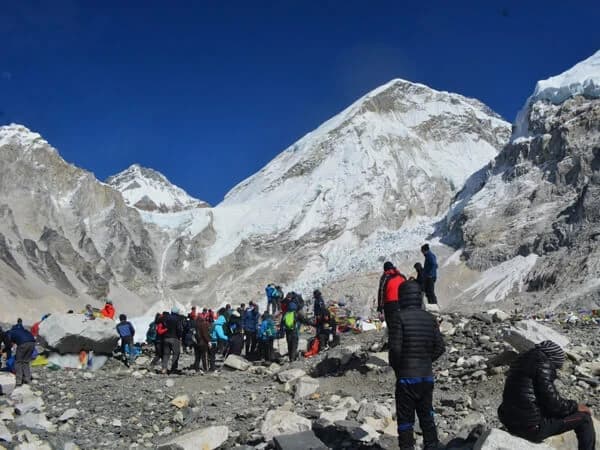
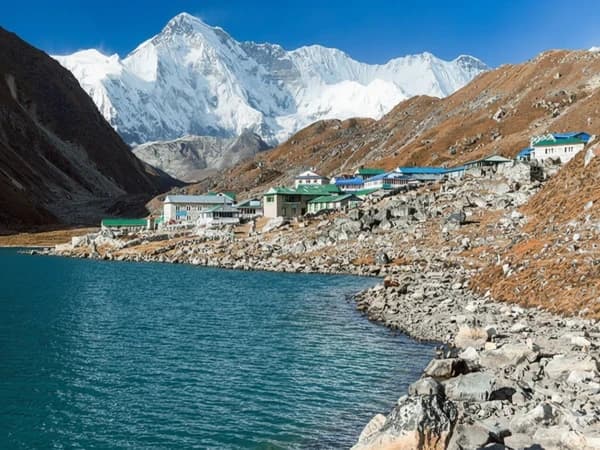
The Everest View Trek is the shortest, gentlest way to see Mount Everest up close. It follows the same legendary trail that every Base Camp trekker walks, through Sagarmatha National Park, across suspension bridges draped in prayer flags, and past the ancient monastery at Tengboche, where monks chant at dawn, but it turns around before the high altitude begins. The result is a trek that gives you the most classic views in the Himalayas without the sub-zero nights, the altitude headaches, or the physical demands that Base Camp requires. You will sleep in teahouses warmed by woodsmoke, eat dal bhat cooked by Sherpa families who have lived in these mountains for generations, and walk through landscapes that most people only see in documentaries, all in one week.
What Makes This Trek Special
- See Everest, Lhotse, and Ama Dablam from the terrace of the Everest View Hotel (3,880m / 12,730ft), the highest-placed hotel in the world, with a cup of tea in your hand
- Visit Tengboche Monastery, the spiritual heart of the Khumbu, the largest Buddhist monastery in the Everest region, framed against Everest and Ama Dablam
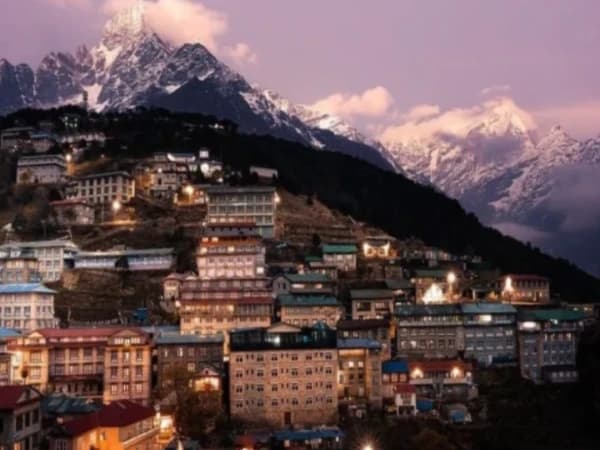
- Acclimatise in Namche Bazaar (3,440m / 11,286ft), the Sherpa capital with markets, bakeries, and the best apple pie in the Himalayas
- Walk through Sagarmatha National Park, a UNESCO World Heritage Site, home to Himalayan tahr, musk deer, and over 100 species of birds
- Cross suspension bridges draped in prayer flags over the Dudh Koshi River, some of the highest in the world
- Land at Lukla (2,860m / 9,383ft), one of the world’s most dramatic airports, where the runway ends at a mountain wall
- Trek at a gentle pace, maximum altitude 3,880 metres, suitable for first-time trekkers, over-50s, and families with older children
- Experience Sherpa hospitality in centuries-old villages where Buddhist prayer wheels spin at every corner
- Complete a full Everest experience in just seven days, ideal for trekkers with limited holiday time or those testing their readiness for longer treks
7-Day Everest View Trek Overview
Seven days. That is all it takes to fly into the Khumbu, walk the most famous trail in the Himalayas, see Everest from the finest viewpoint below Base Camp, and fly home. This is not a lesser trek; it is a different one, designed for people who want the mountains without the extreme altitude, the views without the headaches, and the Sherpa culture without the three-week commitment.
The route follows the classic Everest trail from Lukla through Phakding (2,610m / 8,563ft) to Namche Bazaar (3,440m / 11,286ft), where an acclimatisation day lets your body adjust to the thinning air. On your rest day, you hike up to the Everest View Hotel at Syangboche (3,880m / 12,730ft), a ninety-minute climb that delivers the first unobstructed panorama of Everest, Lhotse, Ama Dablam, and the full sweep of the Khumbu peaks. The hotel was built by Japanese investors in 1971 and serves tea on a terrace with a view that justifies any price. Then you walk back down to sleep. Climb high, sleep low: the golden rule of altitude safety.
From Namche, the trail to Tengboche contours along the hillside above the Dudh Koshi through rhododendron forest, spectacular with red and pink blossoms in spring and atmospheric and bare in autumn. Tengboche Monastery is the largest and most important in the Khumbu, framed against a sky that holds Everest and Ama Dablam in a single view. Sunset here, watching the first orange touch Everest’s summit while the valley below falls into shadow, is one of the defining moments of any Nepal trek.
The return follows the same trail south through Namche and Phakding to Lukla. By now, the teahouse owners greet you by name, the trail feels familiar, and the descent is fast and light. The final evening in Kathmandu is a chance to look back at what you saw and decide whether this was enough or just the beginning.
Before You Arrive
Please arrive in Kathmandu by 4 PM the day before your trek. This gives you time for a final gear check, a briefing with your guide, and a good night’s rest before the early morning start.
Your Online Briefing
Think of this as our first coffee together, but online. After you book, we schedule a video call where we walk you through every detail: what to pack, what each day on the trail looks like, how the moderate altitude will feel, and anything else on your mind. No question is too The briefingl.
This is also when we learn about you. Our trek itinerary does not include your hotel in Kathmandu. During the briefing, please share your preferences and budget, and we will arrange accommodation that fits your needs. Whether you want a simple guesthouse in Thamel or a five-star hotel, we will set it up for you.
Lukla Flight — What You Need to Know
The flight to Lukla is one of the most dramatic in the world, a short ride between mountain peaks that ends on a runway carved into a hillside at 2,860m (9,383ft). From Kathmandu, it takes about 40 minutes. From Manthali, it takes about 20 minutes. It is also weather-dependent. Fog, cloud, or wind can delay flights, sometimes for a full day. This is normal in the Himalayas and nothing to worry about, but it is something to plan for.
We strongly recommend keeping two buffer days at the end of your trip before your international flight home. This protects your connection if weather delays your return from Lukla.
During peak trekking season (March–May and October–November), flights to Lukla operate from Manthali Airport (Ramechhap) instead of Kathmandu to reduce congestion on Kathmandu’s single runway. If your flight leaves Manthali, we will pick you up from your hotel around midnight and drive you there (4–6 hours).
For your return, you fly from Lukla back to Kathmandu or Manthali. If your return flight lands at Manthali, we drive you back to Kathmandu (4–6 hours). All ground transportation is included in every package.
Your Trek, Your Way
Every trek we run is private, your group only, with no strangers added. Whether you choose Budget, Standard, or Luxury, the mountains are yours and your companions’ alone. This is not a conveyor belt. This is your personal Himalayan experience.
Your hotel in Kathmandu is not included in the trek package, and that is intentional. Kathmandu has everything from USD 10 guesthouses in Thamel to five-star hotels with rooftop views of the city. During the online briefing, tell us what you prefer, and we will arrange it for you. Your trek package begins the moment you leave Kathmandu for the mountains.
Difficulty: Moderate (3 out of 5)
You will walk 4-6 hours a day over well-established mountain trails. The maximum altitude is 3,880 metres (12,730ft), high enough to feel the thin air but low enough that acclimatisation is straightforward for most healthy adults. No previous trekking experience is required. You do not need mountaineering gear, supplemental oxygen, or extreme fitness. You need decent walking boots, warm layers, and the willingness to put one foot in front of the other. This trek is suitable for first-timers, over-50s, families with older children, and honeymooners looking for something more meaningful than a beach.
Compare Our Three Packages
| Budget | Standard | Luxury | |
|---|---|---|---|
| Price from | USD 1,062 | USD 1,650 | USD 2,649 |
| Meals | Choose your own (approx. USD 15-25/day) | 3 meals + tea + fruits + 2L water daily | All meals + all drinks anytime (except alcohol) |
| Room | Shared teahouse | Private twin w/ bathroom | Private deluxe w/ bed heater |
| Porter | Not included | 1 per 2 trekkers | 1 per trekker (carry nothing) |
| Guide | 1 guide, assistant at 8+ | 1 guide per 6; assistant at 6+ | 1 guide per 2 trekkers |
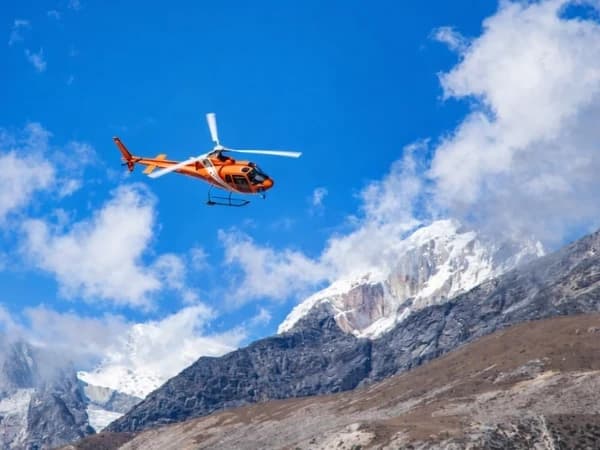
| Transport | Bus/jeep to Manthali + flight to Lukla | Private vehicle + flight to Lukla | Helicopter Kathmandu–Lukla both ways |
| SIM data | SIM only | Limited data | Unlimited data |
| Best for | Backpackers, first-timers on a budget | Couples, families, comfort seekers | Honeymooners, premium experience |
Himalayas for Every Budget: the same expert guides, the same safety, and three comfort levels.
Difficulty: Moderate (3 out of 5)
This is one of the most accessible treks in the Everest region. You walk 4-6 hours per day on well-established trails, reaching a maximum of 3,880 metres (12,730ft) at the Everest View Hotel. The paths are uneven in places, with stone steps, suspension bridges, and moderate ascents, but nothing requires technical skill or previous mountain experience. One acclimatisation day at Namche Bazaar is built into the itinerary, and our guides monitor your condition throughout.
If you can walk for four to six hours a day at a steady pace, you can do this trek. It is suitable for complete beginners, trekkers over 50, families with older children (12+), and anyone who wants to test the Himalayas before committing to a longer expedition. Many of our Everest View trekkers come back the following year for the full Base Camp route.
A short trek with a long footprint
Even our shortest trek — the seven-day Everest View — feeds the family charity that runs the Nagarjun Learning Center in rural Nepal. Seventy children attend the center, all on free places, and all receive two hot meals a day during the school year. The school is a registered Nepalese charity and is listed on the UN Partner Portal. Booking even one of our shorter routes pays a real share toward the cost of running it for a year.