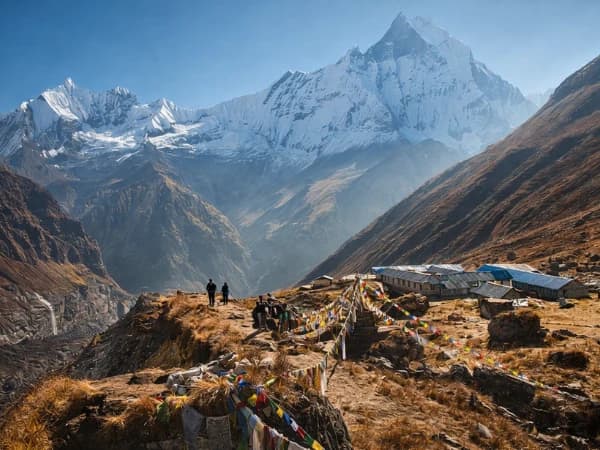
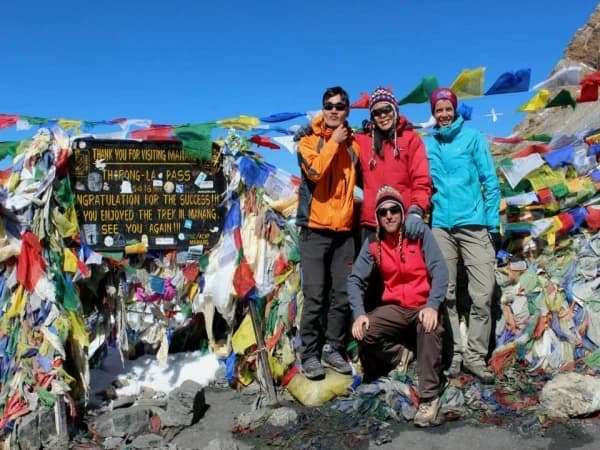
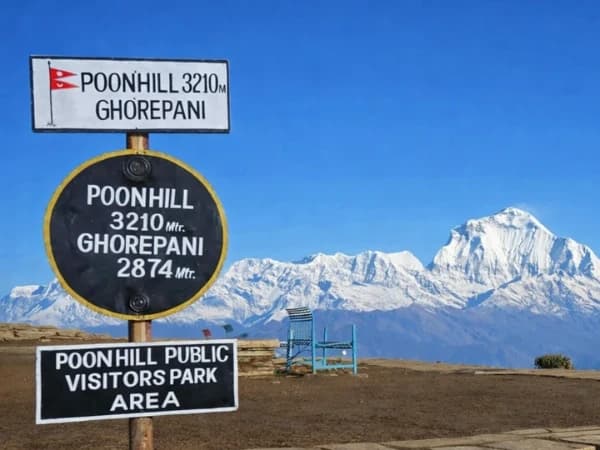
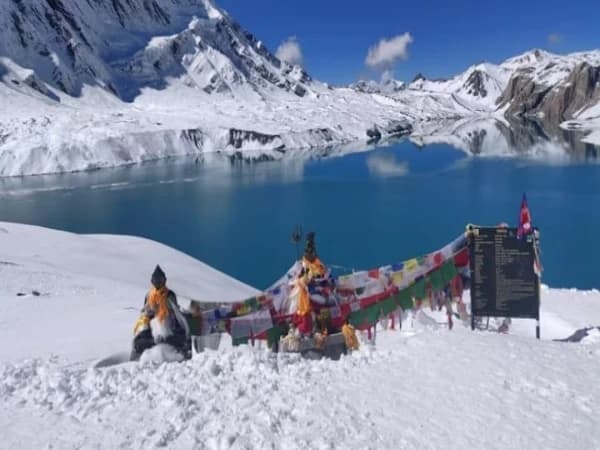
The Annapurna region is the most-walked trekking area in Nepal, and the easiest one to access from Kathmandu via Pokhara. The two flagship routes are the Annapurna Circuit, a 12-to-18-day loop that crosses the Thorong La pass at 5,416m, and the Annapurna Base Camp trek, a 9-to-12-day in-and-out walk into the natural amphitheatre of mountains south of the main range. Shorter options like Poon Hill (4-5 days) and Mardi Himal (6-7 days) make this the right region if you have less than two weeks. The trails pass through Gurung and Magar villages where families have been running teahouses for forty years, so the lodges are comfortable, the food is consistent, and you are rarely more than a few hours from the next stop.
Why choose an Annapurna Trek?
Choosing an Annapurna Region Trek means choosing variety, ease of access, and a deep cultural experience. You'll see a wide range of habitats and have real interactions with Gurung and Magar populations on either the famous 12-day Annapurna Circuit or a shorter Ghorepani Poon Hill trek. Our programmes put safety first by including acclimatisation days, skilled local guides, and comfortable teahouse lodge accommodations. This makes sure that your trip to Annapurna Base Camp or around the whole mountain is both rewarding and well-organised.
Best Time to Trek Annapurna: A Season Guide
Finding the best season to hike Annapurna is very important for your trip. Autumn (October to November) and spring (March to May) are the best times to visit. The weather is consistent, the skies are clear, and the Thorong La Pass is in excellent shape for crossing in the fall. In the spring, the weather gets warmer, the rhododendron forests bloom, and the paths come to life. Winter (December to February) is a great time for experienced hikers to go since it's quiet and the vistas are clear, but it's also colder. The monsoon season (June to September) isn't as good because it rains and the mountains are hard to see.
Cultural Experience Along the Trail
Many deep cultural features make the Annapurna trekking trip even better. The trek goes through famous Gurung villages like Ghandruk and Landruk, where you may learn about traditional ways of life and how to be a welcoming host. Muktinath Temple is a holy place that many people visit as a pilgrimage. The old Braga Monastery in Manang is a wonderful place to learn about Tibetan Buddhism. Staying in family-run teahouses lets you really connect with the people, which makes your trek more than just a hike—it's a trip into the heart of Nepalese culture.
How we know the Annapurna region
The Annapurna region was one of the first parts of Nepal to open to international trekking, and the Annapurna Conservation Area, which surrounds most of the routes you have heard of, was created in 1986. By the time our father, Ganesh Prasad Simkhada, was serving on the Board of Executive Directors of the Nepal Tourism Board from 2009 to 2011, the Annapurna region was already Nepal's most-walked trekking destination. His job during those years was not just managing the busy regions but improving them, working on tourism infrastructure development, on permit and conservation regulations, and on programmes for the benefit of the trekking guides, the climbing guides, and the porters who actually make these treks possible.
Before that, from 2005 through 2008, he served as general secretary of the Nepal Mountaineering Association, where he worked on training and certifying the Nepali mountaineering guides to international standards. Many of the senior guides who today walk foreign trekkers up the Annapurna Circuit, into Thorong La, and around the sanctuary to Annapurna Base Camp came up through the system that he was running in those years. Our father was himself a working trekking guide before he moved into the institutional side of the industry, and he has personally walked every trekking region of Nepal. Annapurna has been part of his working life for decades.
We also have guides and porters on our team who are actually from the Annapurna region itself. They grew up in the foothills villages of Lamjung and the surrounding districts. Some of them started out carrying loads on these same trails before moving up into guiding work, which is exactly the kind of career path our father spent years building proper structures for at the mountaineering association. When you book an Annapurna trek with us there is a real chance the person walking with you was raised in one of the villages you will pass through, knows the families running the lodges by name, and has been on these trails since they were old enough to carry a load. You can read the profiles of the team on the our team page of this website.
Our family is from Gorkha and Dhading, on the other side of the Manaslu massif from the Annapurna range. So we are not telling you we grew up in Chame or in Chomrong. But the Annapurna Circuit and the Manaslu Circuit actually meet on the same trail at Dharapani in Manang District, which means our trekkers walking the Manaslu Circuit and our trekkers walking the Annapurna Circuit are sometimes literally on the same path. We have walked both directions many times.
When you book an Annapurna trek with us you get a team that knows the lodges, knows the guides, knows what the weather actually does in March and in October, and knows what to do when a flight to jomsom gets cancelled because of wind. That knowledge comes from walking the routes ourselves, from inheriting the institutional view from our father, and from having guides on the team who were actually born in those valleys. It is not the same as being from Chomrong if you are the founder, and we will not pretend it is. But between the institutional knowledge and the local guides, it is real, and it is honest.